Yes, Turf Can Go Over Concrete, but Not Every Slab Is a Good Candidate
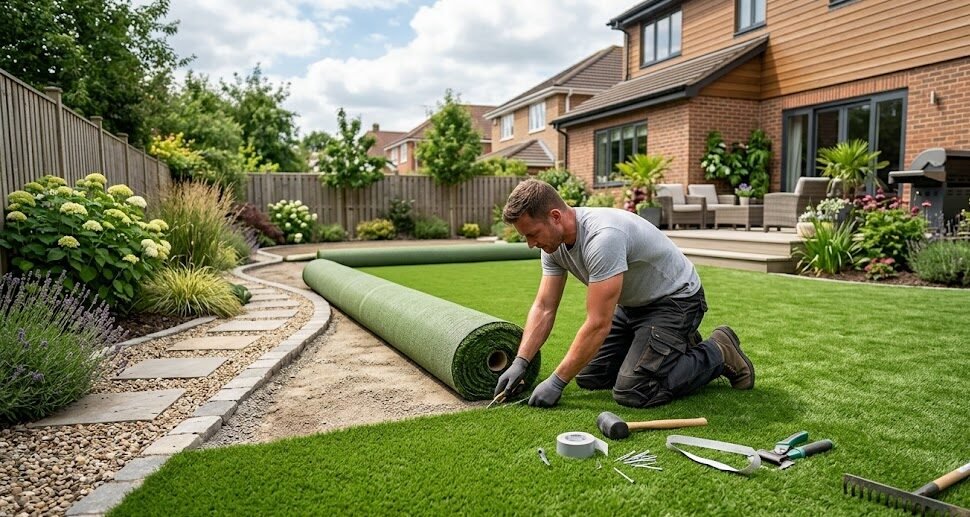
Artificial turf can be installed directly over concrete, and in Central Florida it is one of the most common ways to turn a bare patio, a pool deck corner, a dog run or a narrow side yard into green space without tearing anything out. Done right, it gives you a soft, clean surface that drains, stays put through summer storms and lasts for years. Done wrong, it turns into a soggy, smelly mat that ripples in the heat and pulls up at the edges.
The difference is almost never the turf itself. It is the slab underneath. Over soil, an installer builds a compacted, permeable base that lets water soak straight down. Over concrete, water cannot go down, so it has to run sideways across the slab and off the edge, or out through drainage holes. Every decision on a concrete install, from the pad to the adhesive to the edge detail, comes back to one question: where does the water go?
This guide explains when turf over concrete works in a Florida yard, how the slab has to be prepared, what padding and adhesive do, what drilling drainage holes involves and when it is better to remove the concrete and install over a proper base instead.
Where Turf Over Concrete Makes the Most Sense
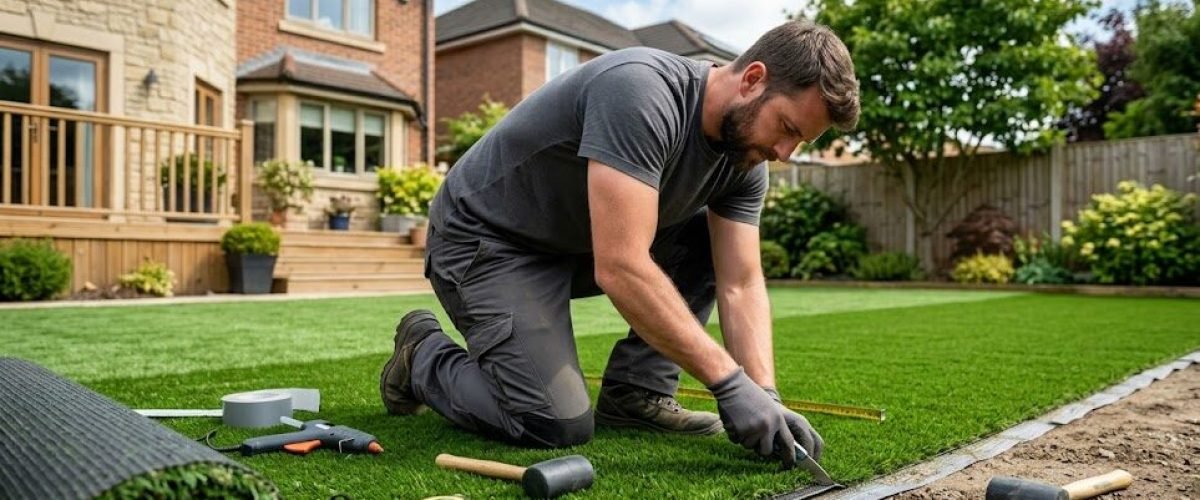
The best candidates are slabs that are sound, have some slope and are not carrying a lot of water from somewhere else. Typical Florida projects include:
- Back patios and lanais: a plain concrete patio that bakes in the sun and looks unfinished can become a soft play or lounge area.
- Pool deck sections: a corner of the deck turned into a putting green or lounge pad, as long as pool splash and drainage are planned for.
- Dog runs and side yards: narrow concrete strips along the house that dogs use every day, where turf is easier to rinse than gravel and softer than bare slab.
- Balconies and rooftop decks: condos and townhomes often use turf over concrete balconies, subject to building and HOA rules about drainage, weight and attachment.
- Old slabs from removed structures: the pad of a removed shed, a hot tub or an old screen room that would be expensive to break out.
What these have in common is that the concrete is doing something useful as a base: it is flat, stable and not going anywhere. If you would have to fight the slab to make it work, the project is usually better done another way.
Check the Slab Before Anything Else
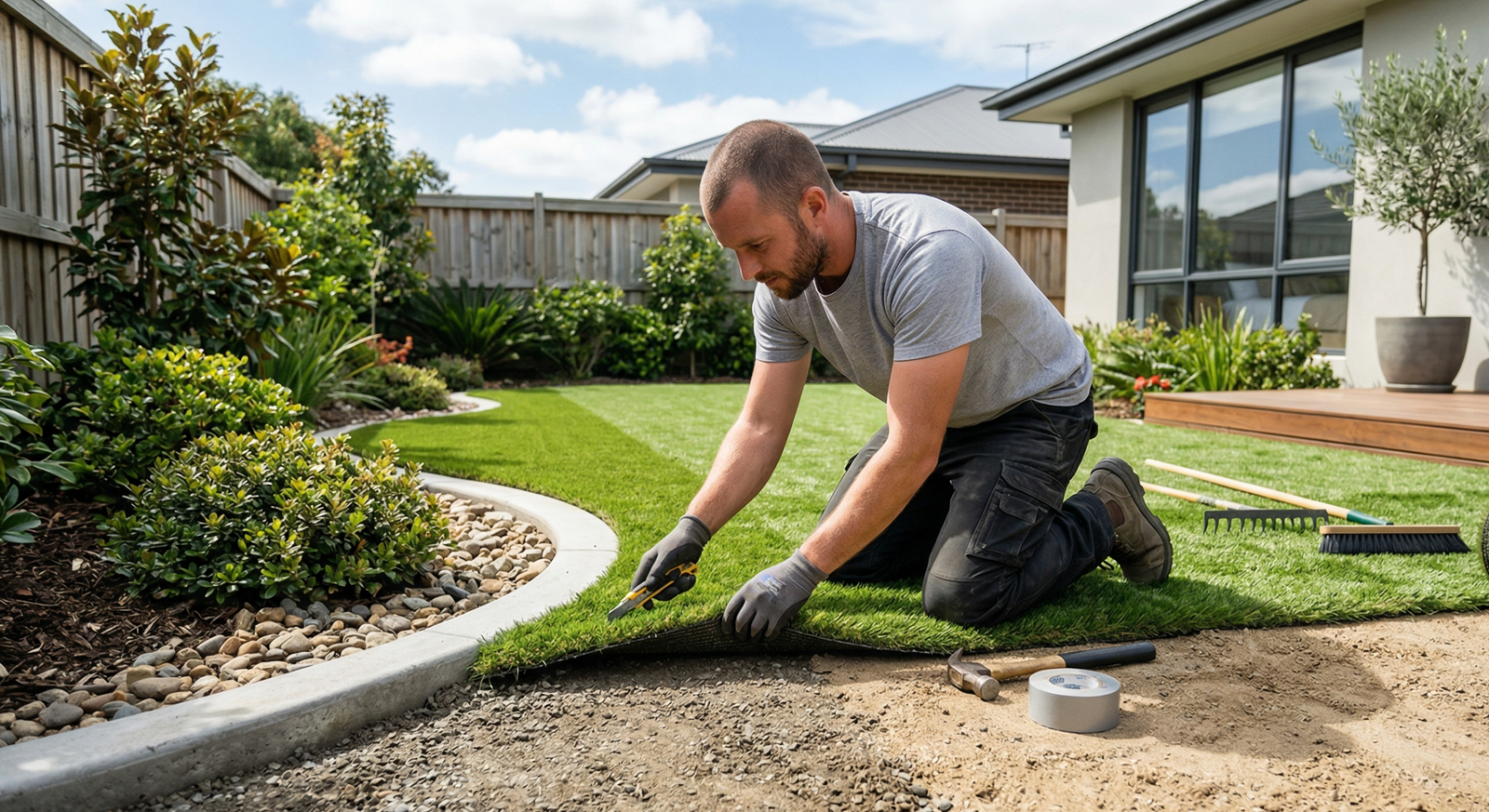
A turf installer looking at concrete is mostly looking for three things: cracks and heaving, slope and existing water problems. A walk through after a heavy afternoon rain tells you more than any measurement.
- Cracks and heaving: hairline cracks are normal and usually fine under turf. Cracks wider than about a quarter inch, sections that have lifted or sunk, or edges that rock underfoot will show through the turf and should be repaired or ground down first.
- Slope: most exterior slabs are poured with a small fall away from the house, often in the range of 1 to 2 percent. That fall is what carries water off the slab once turf is down. A level or a garden hose tells you which way the water goes.
- Ponding: puddles that sit for hours after a storm are the biggest warning sign. Turf does not fix ponding. It hides it and keeps the water in contact with the backing, which is where odor and mildew start.
- Where the runoff lands: water leaving the slab has to go somewhere. If the edge drains toward the house foundation, a pool or a neighbor, that has to be solved before turf goes in.
- Surface condition: paint, sealer, oil stains and loose debris can stop adhesive from bonding. Power washing and letting the slab dry fully is standard preparation.
Repair materials need to cure before the install. Patching compounds typically need at least 24 hours, and the label on the product is the rule to follow.
The Florida Drainage Problem, and How Installers Solve It
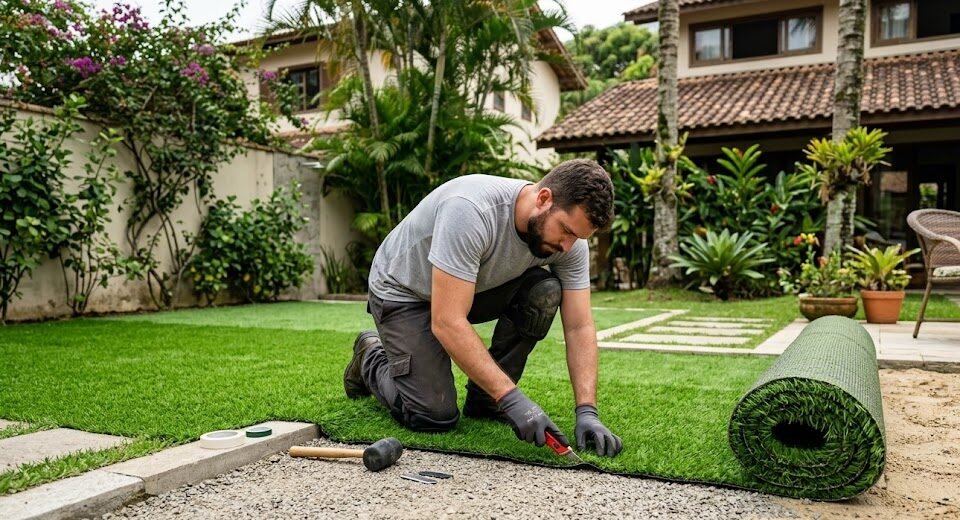
Central Florida gets most of its rain in the summer rainy season, roughly June through September, often in short, heavy afternoon storms. Over soil, quality turf drains through the perforations in its backing into the base below. Over concrete, the same water reaches the slab and has nowhere to go but sideways. On a slab with good fall, it runs under the turf and out at the low edge. On a flat slab, it sits.
Installers deal with this in a few ways, often combined:
- Use the slab's existing fall: turf is laid so water flows to the low edge, and that edge is left open or finished with a detail that lets water out instead of trapping it behind a border.
- A drainage layer under the turf: perforated foam pads, dimpled drainage mats or open-cell underlayment create a small gap under the turf so water can move across the slab.
- Drainage holes in the slab: on slabs with low spots or no fall, holes can be drilled through the concrete and filled with gravel so water drops into the soil below. Installer guides commonly mention bits around 16 mm, with spacing ranging from about every foot or so at low spots to every few feet across the slab.
- Edge cuts or channels: cutting a shallow channel or a drain at the low edge gives water a defined exit point.
Drilling deserves a warning in Florida. Many homes sit on slabs that may include post-tensioned steel cables under high tension, and cutting one is dangerous and difficult to repair. Post-tensioned slabs are often marked with a warning stamp in the garage, but a missing stamp is not proof the slab is not post-tensioned. Patio slabs are usually separate from the house foundation, but if there is any doubt, check the plans or the building department records before anyone drills, and never drill into the main house slab.
(321) 353-7445Get Immediate Service
Padding: Comfort, Heat and Hiding the Slab
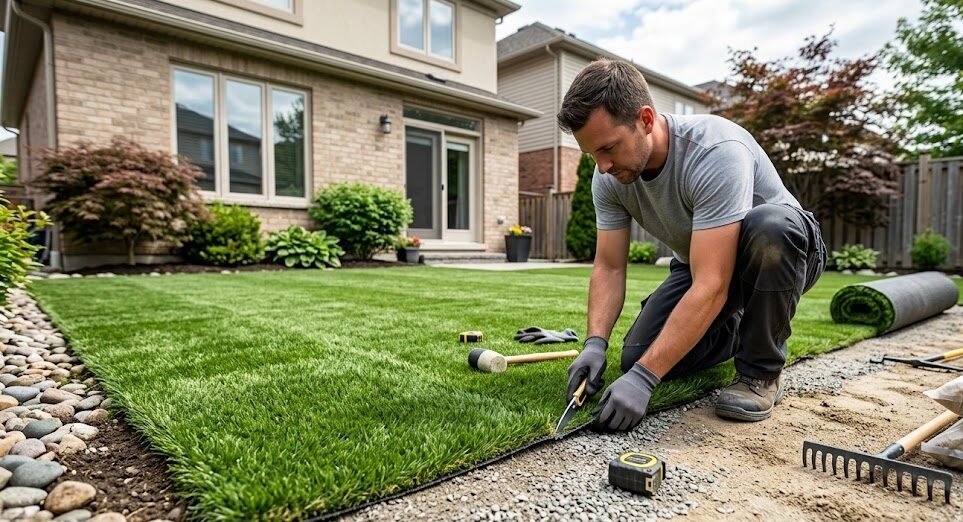
Turf laid straight onto concrete feels like carpet on a sidewalk. That is fine for a decorative strip, but anywhere people sit, play or walk barefoot, a pad underneath makes a real difference. Foam underlayment for turf over hard surfaces usually runs about 5 to 15 mm thick, with the thicker end used for play areas and dog runs.
Padding does more than add comfort:
- It hides imperfections: small joints, trowel marks and hairline cracks disappear under a pad, so they do not telegraph through the turf.
- It helps drainage when perforated: a perforated or open-cell pad lets water pass and move across the slab. A solid, absorbent pad can trap water and should be avoided outdoors.
- It softens falls: for play areas, a thicker shock pad cushions falls. For playground equipment with fall heights, the pad should be chosen to the manufacturer's rating for that height.
- It does not cool the turf: padding does not reduce surface heat. Turf over concrete in full Florida sun gets hot, just like turf over soil.
Our post on whether artificial turf gets hot in Florida covers surface temperatures, shade and infill choices that keep it usable in summer.
Adhesive, Seams and Edges: Keeping Turf in Place Without Stakes
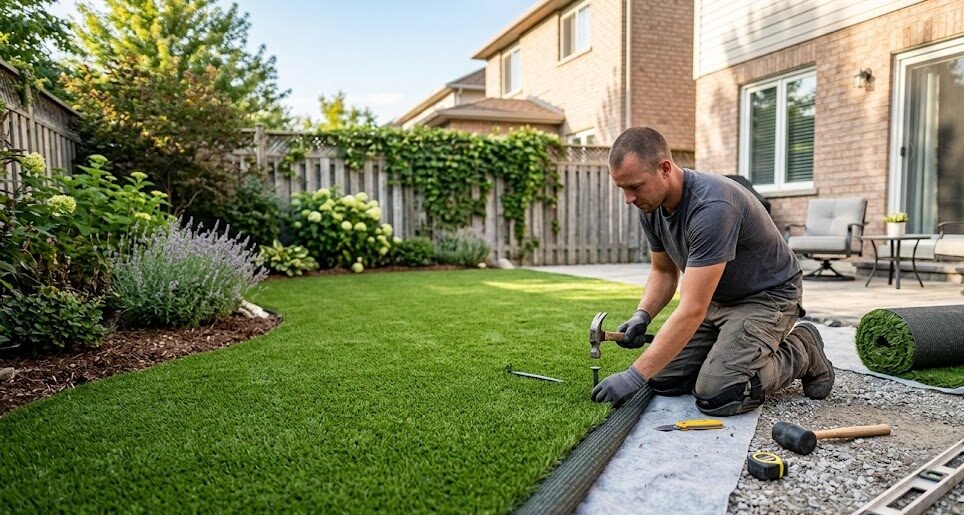
Over soil, turf is held down with landscape nails or staples driven into the base. Concrete does not take nails well, so most concrete installs use outdoor-rated turf adhesive, sometimes combined with a perimeter border.
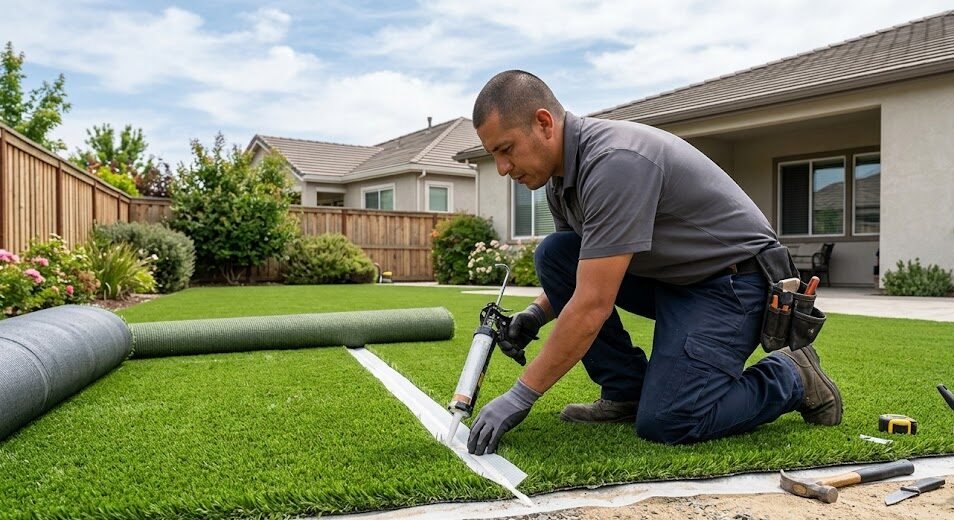
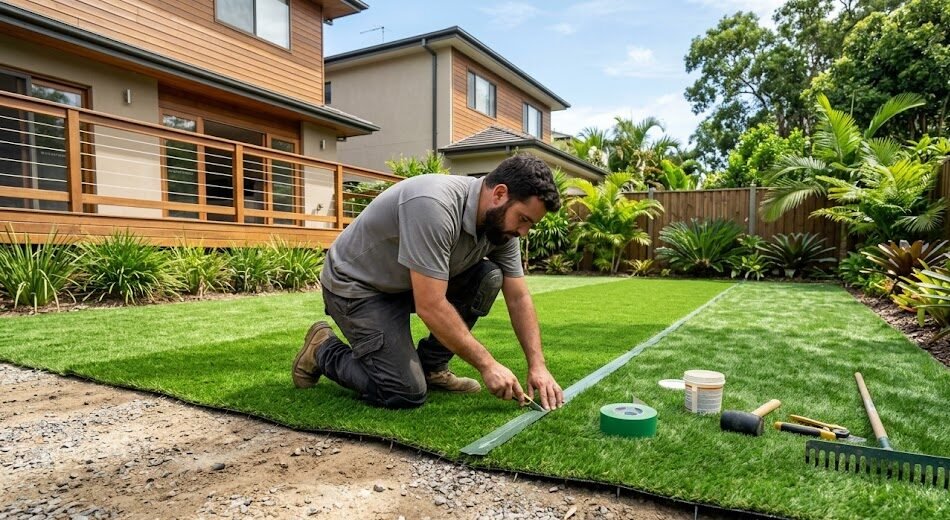
- Perimeter adhesive: a band of adhesive around the edges, commonly about 6 inches wide, holds the turf to the slab. Gluing every square foot is rarely needed and blocks drainage.
- Seams: turf rolls are joined with seam tape and adhesive so the seams do not open in the heat. Seam work is where most DIY concrete installs fail first.
- Breaks in the adhesive: leaving gaps in the glue line at the low edge lets water out. A solid bead around the whole perimeter can turn the turf into a shallow pool.
- Expansion joints: concrete moves with temperature. Turf laid across expansion joints needs to tolerate that movement without tearing or buckling.
- Edge finish: pavers, aluminum edging or a clean cut tucked into a border keep the edge from curling or getting caught by mowers, pets or pool cleaners.
Most adhesives need 24 to 48 hours before heavy use. In Florida summer, that curing window has to fit between afternoon storms, which is one reason scheduling matters on concrete jobs.
Choosing Turf and Infill for a Concrete Install
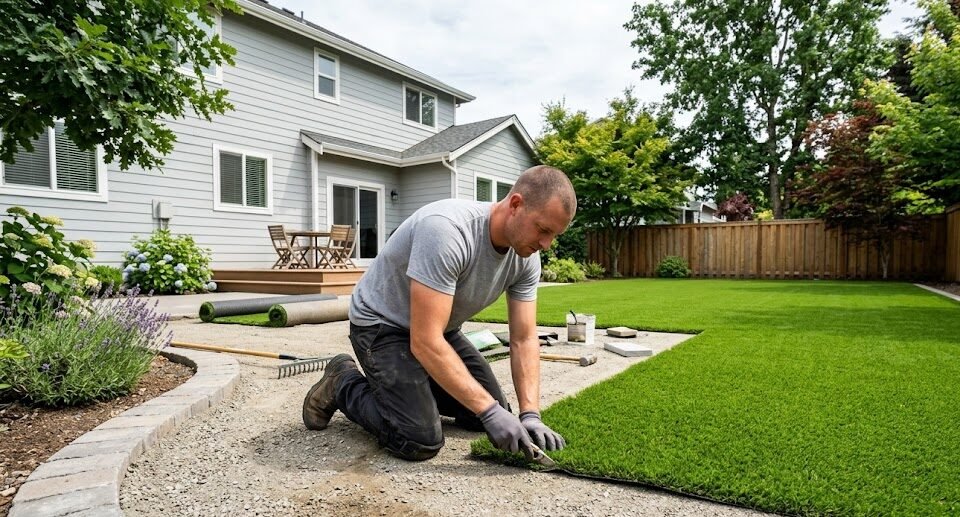
Not every turf product suits a slab. A few product choices matter more over concrete than over soil:
- Fully perforated or flow-through backing: a backing that drains evenly across its whole surface moves water faster than one with widely spaced holes.
- Pile height: shorter piles are easier to keep clean over concrete. For dog areas, installer guidance often suggests keeping pile height under about 1.5 inches for drainage and cleaning.
- Infill amount: infill keeps blades upright and adds weight. Over concrete, too much sand can clog the backing perforations, so it is usually applied more lightly than over soil, often in the range of 1 to 2 pounds per square foot of silica sand, depending on the product.
- Pet-specific products: for dog runs on concrete, antimicrobial infill and regular rinsing matter even more, because urine has no soil to soak into. Our guide to the best turf infill in Florida compares the options.
Turf Over Concrete vs Removing the Slab
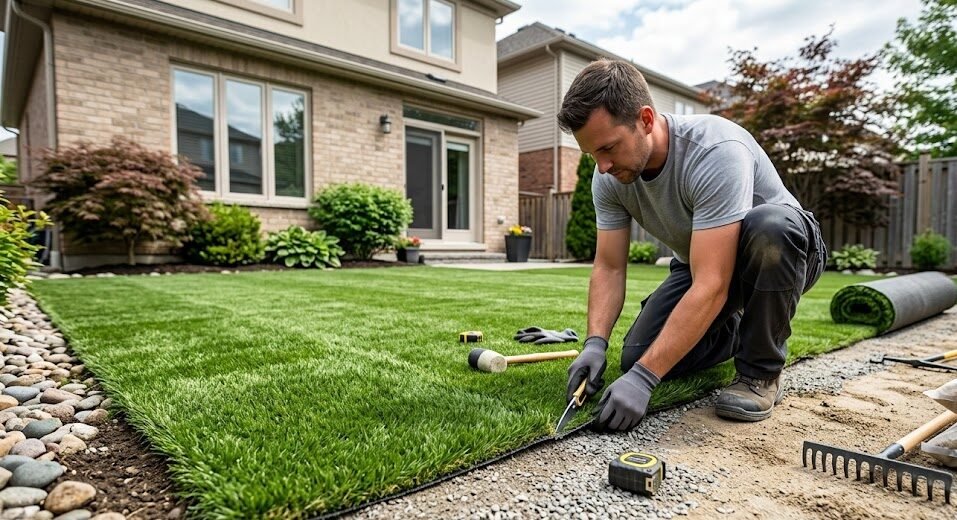
Sometimes the slab is the problem. Breaking it out and installing turf over a compacted aggregate base costs more up front but solves drainage at the root. It is usually the better choice when:
- The slab ponds badly: and drilling is not possible or not enough to move the water.
- The concrete is heavily cracked or heaving: so the surface would need extensive grinding and patching anyway.
- The area is large and flat: big flat slabs move water slowly, and a permeable base drains far better.
- You want a natural lawn feel: turf over a soil base feels closer to real grass than turf over pad on concrete.
- Pets use it heavily: a permeable base lets urine drain away and makes odor easier to control.
For small, sound, sloped slabs, going over the concrete is usually the faster and more economical answer. Our published planning range for residential artificial turf in Florida is roughly $10 to $16 per square foot installed, with a broader statewide range of about $8 to $18 depending on product, infill and base work. Over concrete, the base is already there, but pad, adhesive and drainage work replace it in the budget, and slab repairs or demolition add to the total when they are needed.
Common Mistakes on Concrete Turf Installs
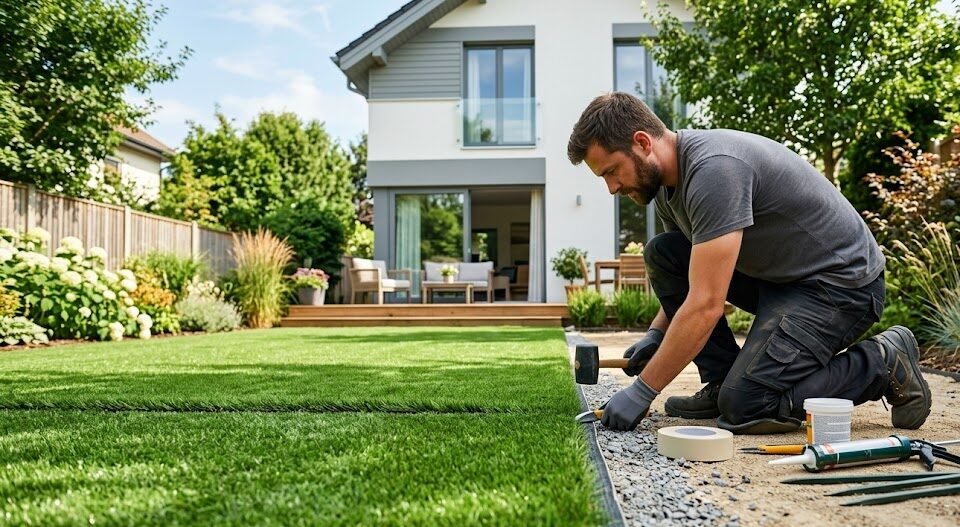
- Gluing the whole surface: full-coverage adhesive seals the backing to the slab and blocks drainage.
- Ignoring ponding: laying turf over a slab that already holds water guarantees odor and mildew.
- Using an absorbent pad: a solid foam pad soaks up water and holds it under the turf.
- Trapping water at the edges: a solid border on the low side of the slab acts like a dam.
- Skipping seam tape: glued seams without proper tape open up in summer heat.
- Drilling without checking: drilling into a slab without confirming it is not post-tensioned or carrying buried lines.
How KS Solutions Installs Turf Over Concrete in Central Florida
KS Solutions starts every concrete turf project with a slab check: cracks, slope, ponding and where the runoff ends up. If the slab is a good candidate, we plan the drainage path, pad and adhesive pattern before any turf is cut. If it is not, we will tell you, and quote removing the slab and building a proper base instead. Our artificial turf installation service covers both, and our brick paver installation crews can build paver borders that finish the edge and let water out.
Homeowners can also see our local pages for artificial turf installation in Orlando, artificial turf installation in Lakeland and artificial turf installation in Kissimmee. Request a free estimate and we will look at your slab, run water across it and tell you honestly whether turf over concrete will work.