The ground under your project decides how long it lasts
Central Florida soils in the Tavares, Astatula and Apopka series look ideal on the first shovel. The top layer is sandy, it digs easily, and surface water vanishes fast. The problem sits lower. These soil series frequently carry a clay layer or an organic hardpan somewhere between roughly 12 and 35 inches down, and that layer holds water below the surface even when the lawn on top looks bone dry.
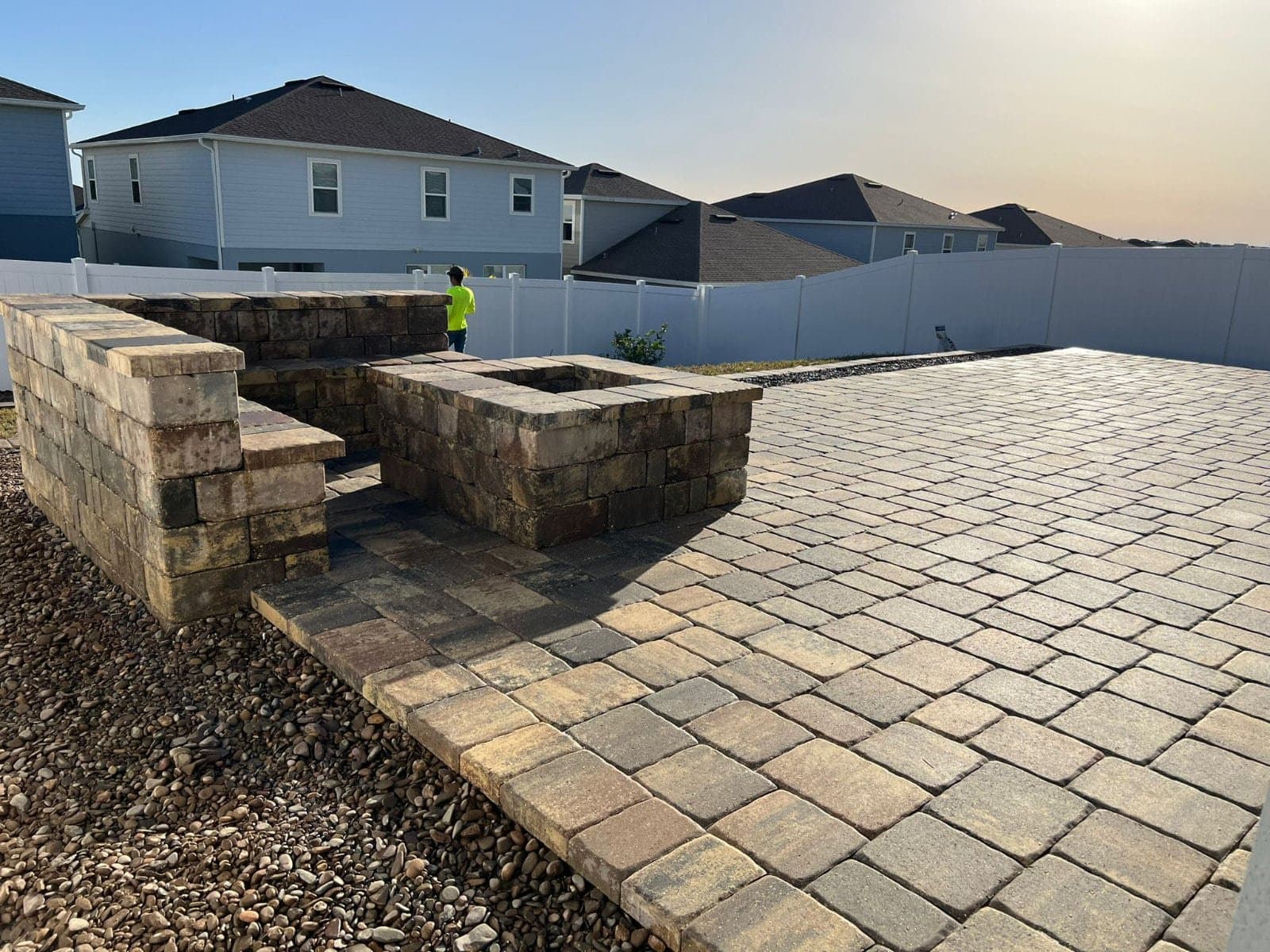
That trapped water is what fails hardscape. A paver surface is not carried by the pavers themselves. It is carried by the compacted base underneath, and a base that stays wet loses the ability to hold load. The pavers do not crack the way poured concrete does. They move. You get a dip where the car parks, a low spot that ponds after an afternoon storm, joints that open up, and edge courses that slowly walk outward.
What a correct base looks like here
- Excavation to a real depth, not a convenient one. A patio and a driveway do not get the same base. Anything carrying vehicle weight needs more material below it than a walkway does.
- Separation over soft or wet subgrade. Where the subgrade is questionable, a geotextile layer keeps base rock and native soil from mixing, which is how a base quietly turns into mush over a few wet seasons.
- Base placed and compacted in lifts. Dumping the full depth and running a plate compactor across the top compacts the top few inches and nothing else. Lifts are slower and they are the difference.
- Bedding layer screeded to a consistent thickness. Using extra sand to hide a base that was never leveled is the single most common shortcut in this trade.
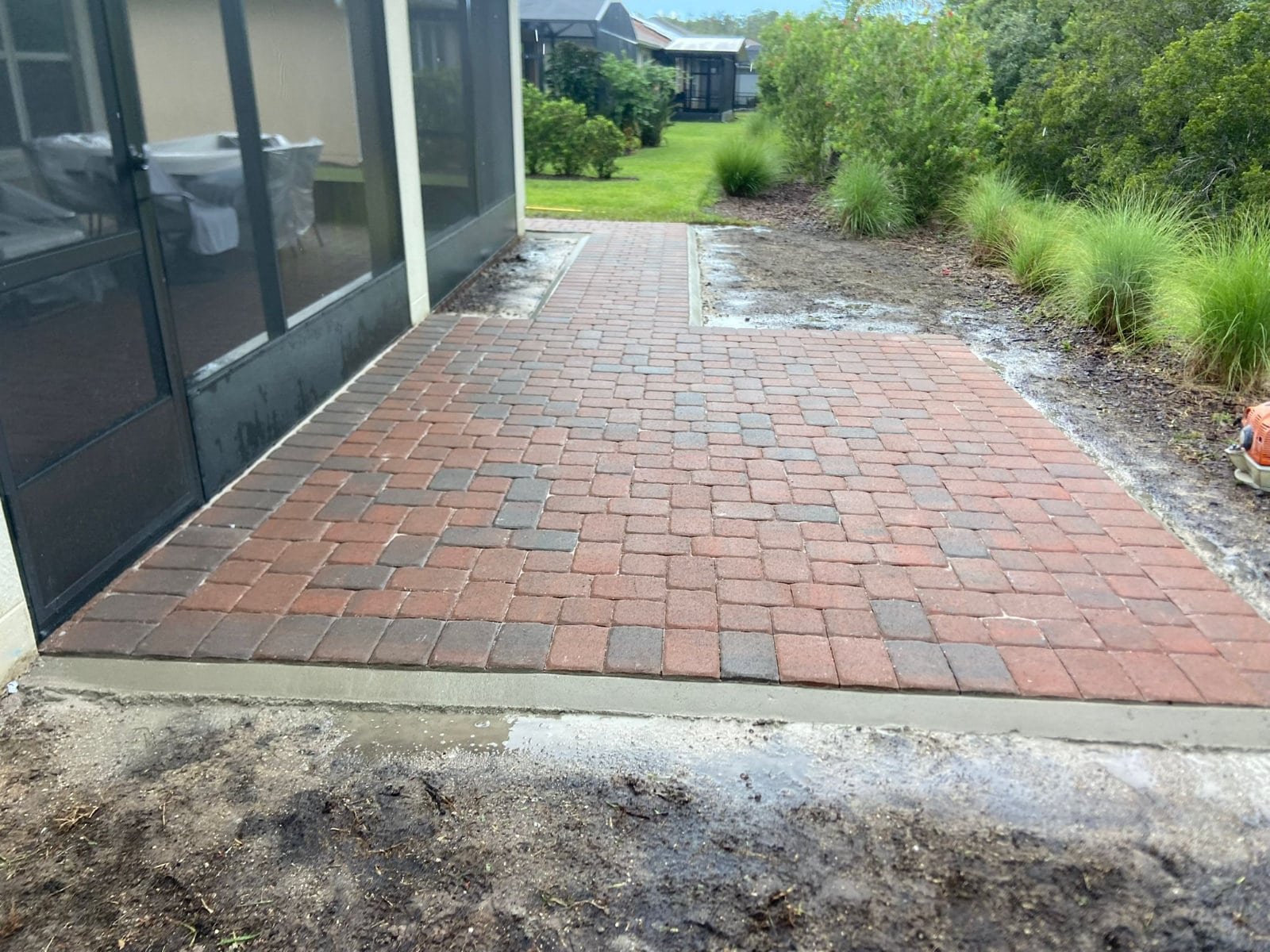
- Edge restraint on every open edge. Without it, the field has nothing to push against and the perimeter spreads.
- Joint sand and a final compaction pass so the units lock together and behave as one surface.
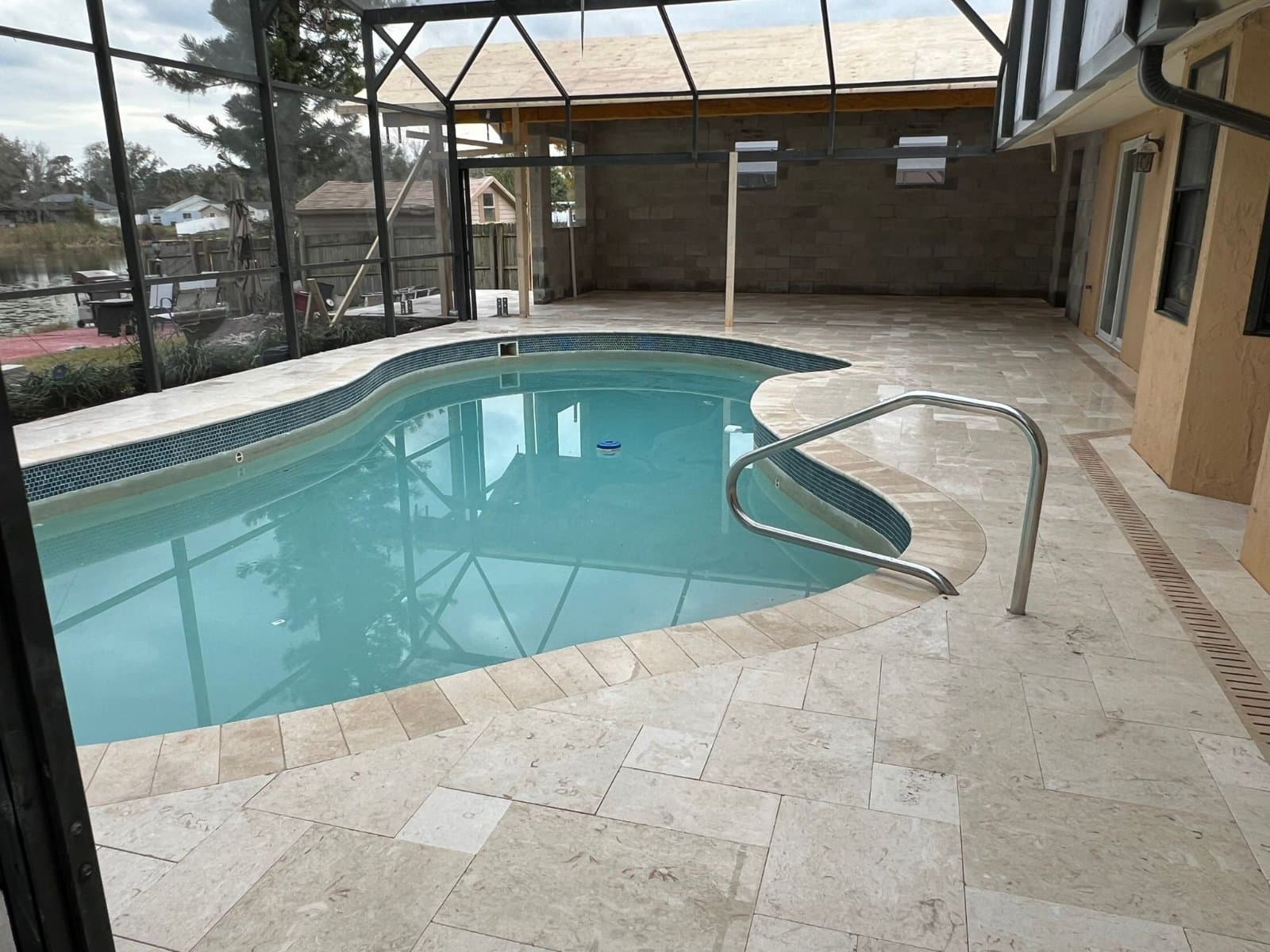
Grading matters just as much as base depth. Water has to leave the surface and it has to leave the base, and on a lot where the hardpan sits close to the surface that can mean adding drainage rather than assuming the sand will take care of it. This is the part of the job that nobody sees in a photo, and it is the part that decides whether the patio still looks right in year eight. You can see the full scope of how we approach it on our brick paver installation page.
The cities and communities we cover across Lake County
Lake County is not one market. It is a string of very different places sharing one building department, and the right recommendation changes depending on which one you live in.
The county is estimated at roughly 468,682 residents in 2026, a growth of about 57.4 percent since 2010. That growth is not evenly spread. Clermont, on the south end near the Orange County line, has been expanding at roughly 3.5 percent per year with a median age of about 42.2, which reads as families, school runs, and backyards that need to work for kids and dogs. The Villages, the planned community that extends into Lake County, sits at the other end of the spectrum with a median age near 71 and more than 80 percent of residents over 55, adding somewhere in the range of 200 to 300 new units per month.
Those two profiles want different things. A Clermont backyard tends to be a full outdoor living build: paver patio, pool deck, a fenced perimeter, sometimes turf in the section of yard that grass has given up on. A 55 and over community tends toward low maintenance and safe footing: level walkways, a screened lanai extension, turf instead of a lawn that needs a mower every week.
We work throughout the county, including:
- Clermont and Minneola in the south, where new construction and rolling terrain both come into play
- Tavares, Eustis and Mount Dora in the central lakes corridor
- Leesburg and the surrounding northwest side of the county
- The Lake County portion of The Villages and the surrounding 55 and over communities
- Unincorporated Lake County, which follows the county code rather than a city code
The construction backdrop is real, not marketing. Lake County approved 4,990 new privately owned housing units through building permits in 2024, 6,316 in 2023 and 5,402 in 2022. That is a lot of brand new backyards that arrived with a slab, a builder grade lawn and nothing else. If you bought new here, you are not unusual for wanting to finish the outside two or three years later.
We also serve the surrounding Central Florida counties: Orange County, Osceola County, Polk County, Seminole County and Volusia County.
Permits: what Lake County actually requires
This is where homeowners get surprised, and where a contractor who works here every week saves you weeks of calendar time.
Paver driveways go through Public Works, not the building department
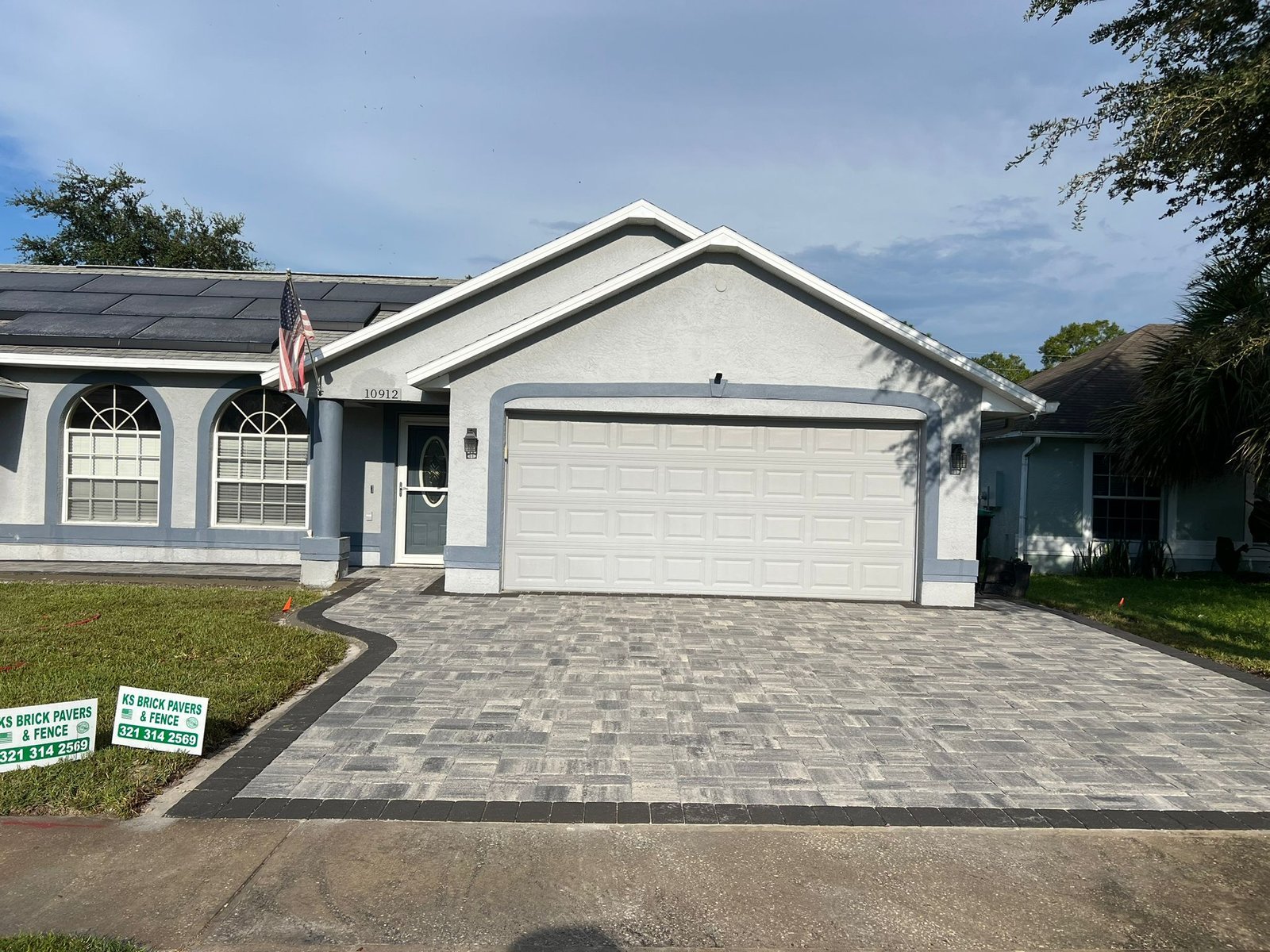
If your project touches the driveway apron, the strip that connects your driveway to the public road, Lake County handles it through the Public Works department with a residential driveway permit, form BF14. It is a separate track from a standard building permit and it has its own review. Worth knowing before you commit: under that county permit framework, pavers used in the driveway access are the homeowner's responsibility to maintain and replace, including if they have to be removed for utility work in the right of way. That is not a reason to avoid a paver driveway. It is a reason to understand who owns what before the first cut.
Fences are governed by height
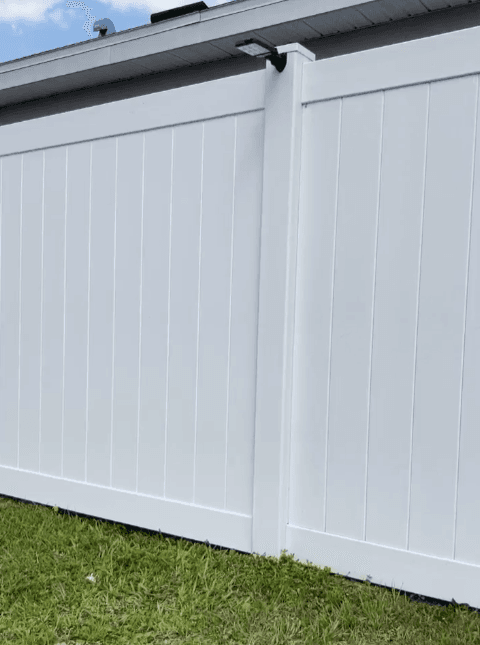
Under the Lake County Code, section 18.100.120, fences are permitted in any zone. In zones not classified as resource zones, a fence over 6 feet tall requires a building permit. Fences at 6 feet and under generally do not. That 6 foot line is the trigger, and it is the number to have in your head when a neighbor recommends a taller privacy panel. Lake County Building Services also publishes a formal walls and fence permit checklist, the CL25 document, so the submittal requirements are written down rather than improvised.
Two things to confirm, not assume
Interior patios are a different question from driveways. We do not tell homeowners that a backyard paver patio does or does not need its own county building permit, because the county's published guidance we can point to covers the driveway apron case. We confirm the current requirement for your specific scope with the county before we start.
The second one: if your address is inside an incorporated city rather than unincorporated county, the city may run its own rules on fences and hardscape. The county code is the baseline for unincorporated Lake County. Your city can differ, and that gets verified per address rather than guessed.
On our end, permitting is part of the job, not an add on you chase yourself. For paver work, we handle every permit and HOA submittal as part of the quote. For fence installation, our team handles the entire process, including submitting plans, paying permit fees and scheduling inspections.
Wind requirements here are inland requirements
There is a lot of confusion about Florida wind rules, most of it imported from South Florida. Lake County falls in Florida wind Zone II, not the coastal Zone III, and it is not in the High Velocity Hurricane Zone. The HVHZ applies only to Miami Dade and Broward counties. In plain terms, the Florida Building Code wind requirements that apply to your fence here are the interior of the state requirements, not the heavier south coastal ones.
What that changes in practice is post spacing, post depth, concrete footing size and panel selection. It does not mean wind is a non issue. It means the engineering target is the inland one, and any contractor quoting you a fence should be able to say what they are building to and why. The exact design wind speed in miles per hour for a given address is not something we quote from memory, because it is address specific and it gets confirmed at permit rather than promised at the estimate.
Hurricane season runs June 1 through November 30, with peak activity from mid August through mid October and a statistical peak around September 10, according to NOAA and the National Hurricane Center. Two practical consequences for a Lake County homeowner:
- Demand spikes after storms. Fence work in particular gets slammed in the weeks following any significant wind event, because every damaged panel in the region calls at once. Scheduling a replacement in spring is a different experience than scheduling one in October.
- Loose components become projectiles. Gates that are not latching properly, panels with pulled fasteners and unrestrained paver edges are all worth fixing before the peak of the season rather than after.
(321) 353-7445Get Immediate Service
Why timing your build around the rainy season pays off
In Lake County and west central Florida, the rainy season runs roughly from May 25 through October 10, with frequent afternoon thunderstorms, dew points above 70 degrees and elevated flash flood risk from July into early September, per the National Weather Service office in Tampa Bay. That is not a small window. It is about four and a half months of the year.
Here is what that does to each of the three trades:
- Pavers. Base compaction depends on moisture content. Base material that is too wet does not compact properly, it just moves. An open excavation that fills with water during a storm has to be dried out or re dug, which costs days.
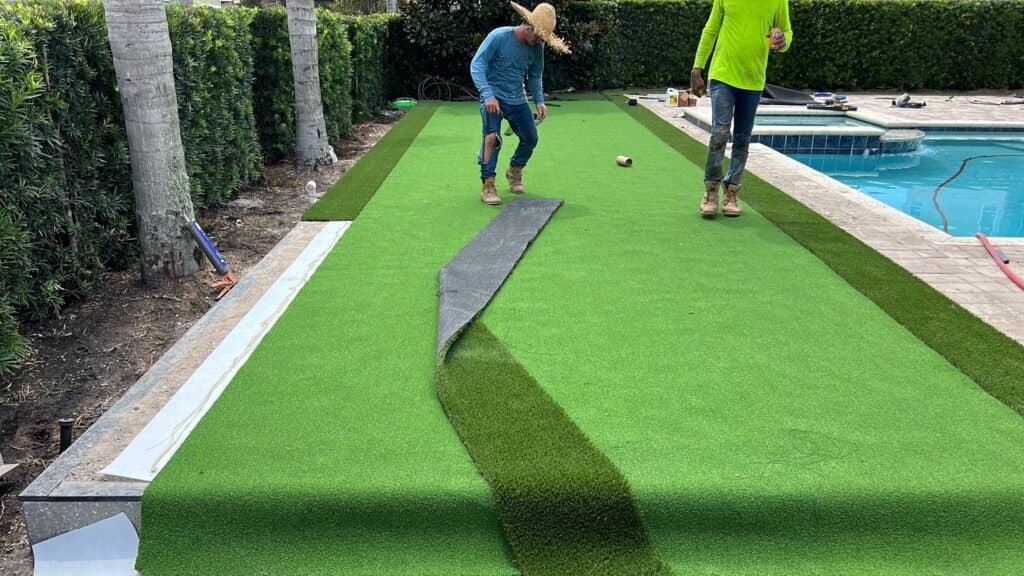
- Artificial turf. The turf base is a drainage system. Building it while the ground beneath is saturated makes it hard to verify the base is doing its job, and heavy rain on an unfinished base can wash out the profile you just built.
- Fences. Post holes in saturated sandy soil are prone to collapsing before the concrete goes in, and setting posts in a hole that keeps caving is how you end up with a fence line that is not straight two years later.
None of this makes summer work impossible. Crews here work through the rainy season every year and plan around the afternoon pattern, starting early and sequencing the wet sensitive steps to the front of the day. But if your project is discretionary and you have flexibility on the calendar, the dry half of the year gives the base work an easier environment, and it keeps your project out of the same weeks when storm damage repair is competing for the same crews. If you are planning a large build, the cleanest sequence is to get the design, permitting and material selection done during the rainy season so the install can start when conditions improve.
What actually moves the price of a paver project
We do not publish prices, because a paver quote written without seeing the lot is a guess. What we can do is tell you which variables the number is built out of, so the estimates you collect are comparable to each other.
- Square footage, but not linearly. A larger area spreads mobilization and setup cost across more surface, so cost per square foot usually improves with size. Very small areas carry a proportionally higher setup burden.
- Base depth and subgrade condition. A driveway needs more base than a patio. A lot where the excavation hits a wet clay layer needs more remediation than one where it does not. This is the line item that separates honest quotes from optimistic ones.
- Spoil removal. Excavation produces material that has to leave. On a tight lot with no place to stage it, that becomes hauling.
- Access. If a machine can reach the work area, the crew moves material with the machine. If the only path is a 36 inch side gate, the same material moves by wheelbarrow. Access is often the single biggest hidden driver on a backyard job.
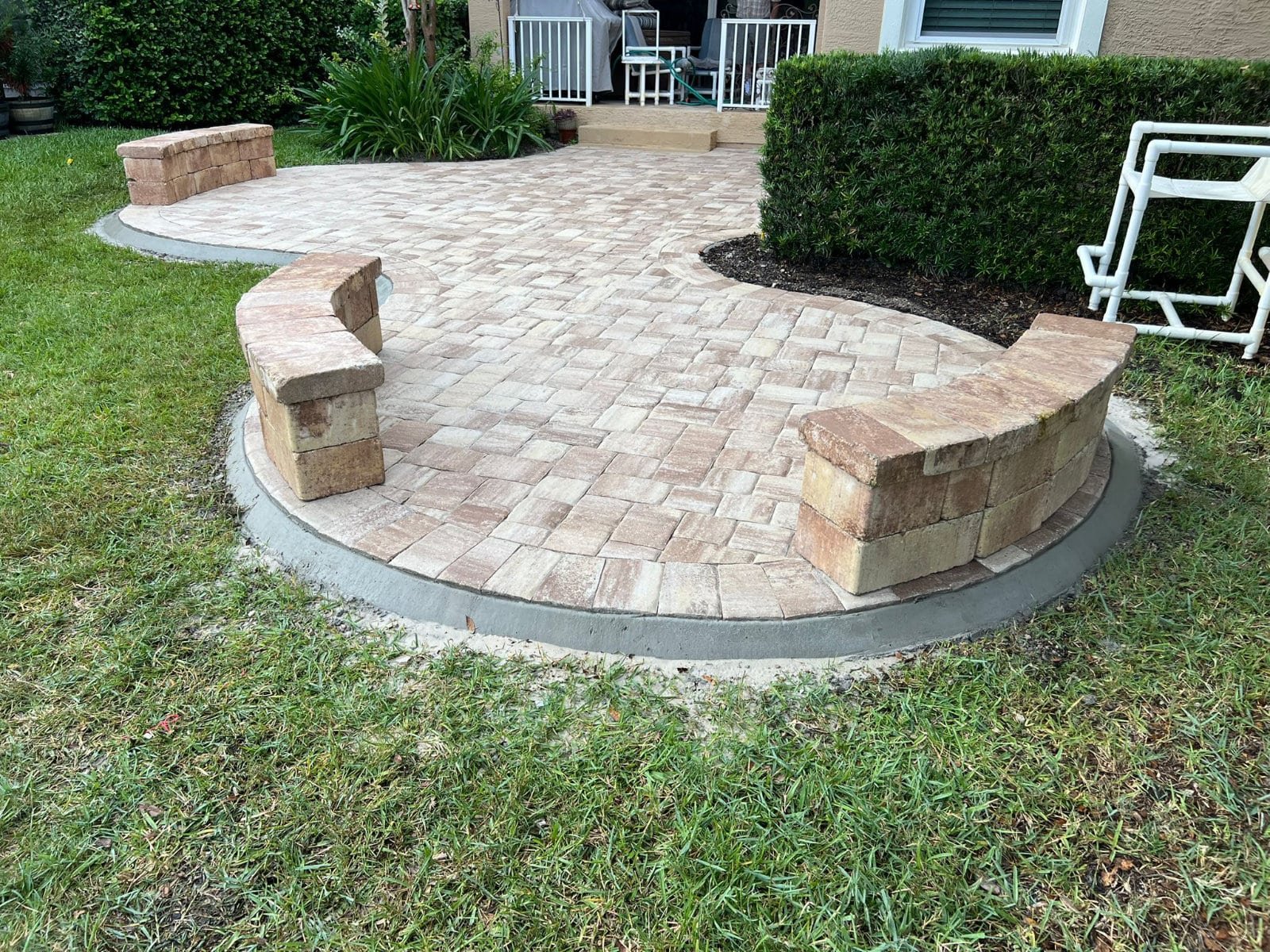
- Pattern and cuts. A running bond on a rectangle cuts fast. Herringbone at 45 degrees against a curved pool deck generates a lot of cutting labor. Borders, inlays and radius edges all add cut time.
- Paver selection. Unit type, thickness and finish vary meaningfully in material cost, and driveway rated units are not the same product as a walkway unit.
- Demolition. Removing an existing concrete slab is its own scope, and reinforced concrete removes very differently from a plain slab.
- Elevation and drainage work. Steps, retaining walls, raised decks and added drainage all change the structural work below the surface.
- Permitting scope. A driveway that requires the county Public Works permit carries a different administrative path than an interior patio.
When you compare two quotes and one is dramatically lower, the difference is almost never the pavers. It is base depth, drainage or edge restraint, and those are the three things you cannot inspect after the surface is laid.
Fences: material choices and how they behave in Lake County
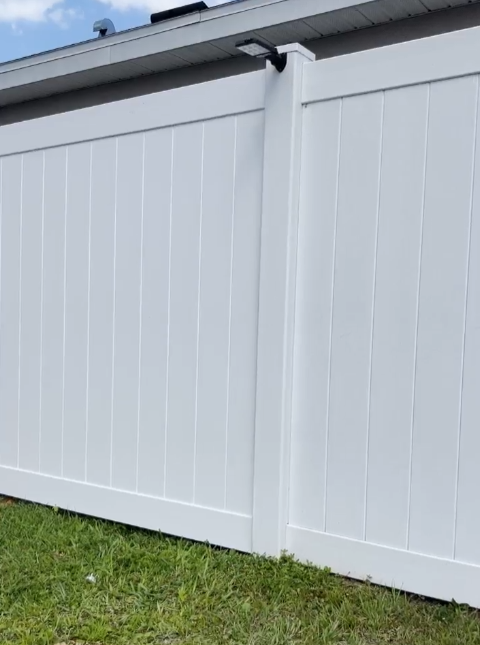
Beyond the 6 foot permit threshold covered above, most fence decisions in this county come down to material behavior and layout.
Choosing a material for the conditions
Vinyl holds color and does not require refinishing, and panel systems handle wind through proper post spacing rather than through panel strength. Aluminum is the usual answer around pools and for view preservation on lots that back to green space or water, since it keeps sight lines open. Wood gives the most privacy per dollar and the most maintenance obligation in a climate with a four month wet season and high humidity. Chain link remains the practical choice for large perimeters, agricultural parcels and dog runs where cost per linear foot dominates.
The details that determine whether it lasts
- Post depth and footing size. Sandy soil offers less lateral resistance than dense clay. Posts that are set shallow will lean, and they lean gradually enough that nobody notices until the line is visibly off.
- Gate hardware and gate posts. Gates fail before fences do, every time. Gate posts carry a swinging load all day, and a double drive gate needs more post than a walk gate.
- Layout against the survey. Setting a fence on a line you assumed rather than a line you verified is an expensive mistake to unwind.
- Grade changes. On rolling terrain, panels either step or rack. Deciding which before installation avoids gaps at the bottom that dogs find within a week.
- Coordination with hardscape. If pavers and fence are both in the plan, running them as one project means the gate swing, patio edge and drainage path are designed together instead of fighting each other.
Artificial turf, and what Florida law says your HOA cannot do
Turf gets asked about constantly here, usually by someone tired of watering a lawn that still browns out, or by a homeowner whose dog has turned one section of yard into dirt.
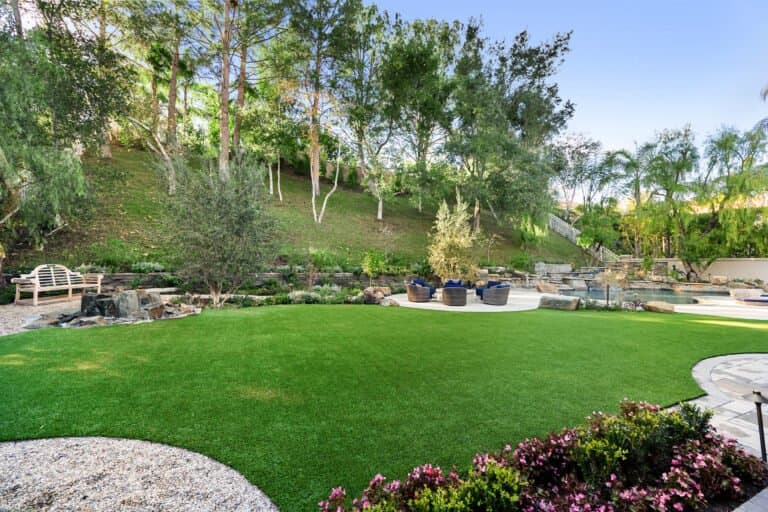
Two pieces of state law are worth knowing. Florida Statute 720.3045 prohibits homeowners associations from restricting the installation of artificial turf in areas of your lot that are not visible from the street or from an adjacent lot, regardless of what the association's covenants, rules or bylaws say. That applies statewide, including HOA communities in Lake County. Separately, Florida HB 683, signed in 2025, limits the ability of local governments, counties included, to prohibit or heavily restrict artificial turf installation, provided the material meets requirements defined by the Florida Department of Environmental Protection.
What we will not do is tell you what your specific association's architectural review committee requires, because that varies by community and is not something to guess at. The submittal still gets made and the approval still gets confirmed. The law defines the floor, not the paperwork.
Technically, turf lives or dies on the same thing pavers do: the base. Turf installed over a base that does not drain will hold water and odor, and in a county where a hardpan can sit a foot or two below the surface, drainage is a design decision rather than an assumption. Pet installations need a base and infill built for it. Play areas need attention to the pad underneath. Details are on our artificial turf installation page.
How to choose a contractor, and what usually goes wrong
Most hardscape complaints in Central Florida trace back to a short list of failures, and all of them are avoidable at the quote stage.
- The base was thin. The most common defect and the most expensive to fix, because correcting it means lifting the entire surface.
- Nobody planned for water. Water was allowed to sit, or was directed toward the house, or was directed onto a neighbor's lot, which creates a second problem.
- Edge restraint was skipped. Cheap to install, and its absence shows up as a spreading perimeter within a couple of seasons.
- The permit was skipped. Unpermitted work becomes your problem at resale, at insurance renewal, or the day a code inspection happens for an unrelated reason.
- Cleanup and restoration were never scoped. Heavy equipment leaves ruts. If restoring the lawn and access path is not in the quote, it is in your weekend.
Questions worth asking every bidder
- What base depth are you specifying, and is it different for the driveway than the patio?
- How are you handling drainage, and where does the water end up?
- Which permits does this scope require, and who pulls them?
- What edge restraint are you using?
- Who is actually on site, and who do I call if something moves next year?
A contractor who can answer those five questions specifically for your lot is telling you they walked it. One who answers generically is quoting from a template.
Once the work is in, the maintenance question is the last one. Paver joints lose sand over time, sealed surfaces need re treatment on a cycle, fences need hardware checked before the wind season and turf needs grooming and infill attention to stay upright. Our outdoor maintenance plans exist so that upkeep runs on a schedule rather than on the day you notice something has gone wrong. If you want to start with a conversation about your lot rather than a product list, that is the right first step.