Every Paver Project in Orange County Needs a Permit
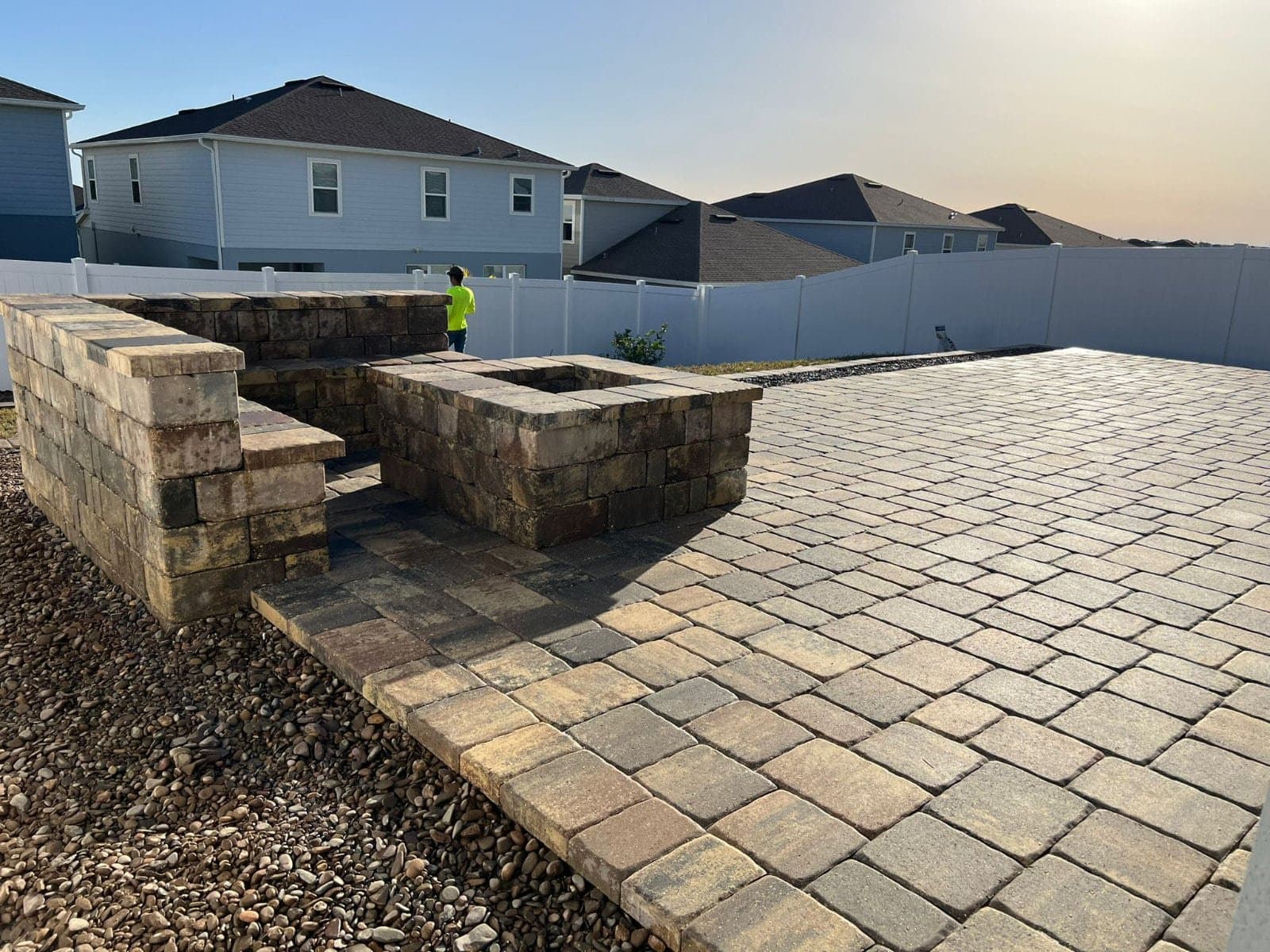
Orange County treats a paver installation the same way it treats pouring concrete: it is work that changes the ground plane of your property, and it requires a permit. The good news for homeowners is that pavers sit on the lighter side of the process. According to the county's own 'Do I Need a Permit' guidance, a paver installation requires a Zoning Permit only. You are not looking at a full Building Permit for a standard patio, walkway, or driveway.
That distinction matters more than it sounds. A Zoning Permit is reviewed by the Orange County Zoning Division, and the review looks at placement: setbacks, easements, drainage, and lot coverage. A Building Permit brings structural review and inspections into the picture, which is a longer and more involved path. Knowing which one your project needs is the difference between a clean start and a stop-work notice halfway through demolition.
KS Solutions handles every permit and HOA submittal as part of the quote. That is not an upsell and not a line item you have to ask about. When we price a paver project in Orange County, the paperwork is inside the number.
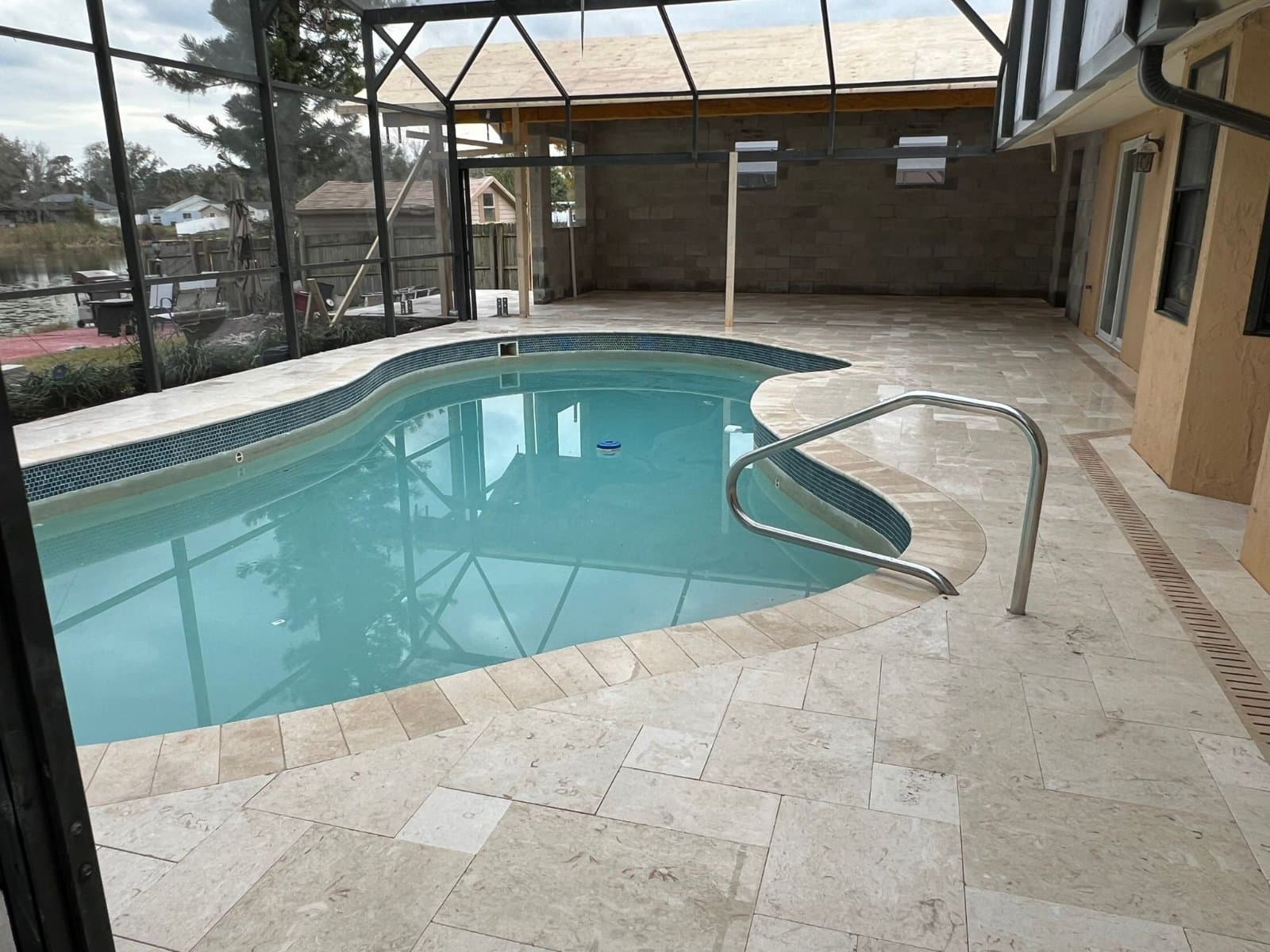
There is one common exception worth flagging early. If your paver project is a pool deck that sits under, or will later sit under, a screen enclosure or lanai, the enclosure itself generally requires a Building Permit in Orange County and has to meet Florida Building Code wind load requirements. The pavers are still a zoning matter. The cage over them is not. If you are planning both, say so at the estimate stage so the permitting path gets mapped once instead of twice.
What Orange County Homeowners Build With Pavers
Most of the paver calls we take in Orange County are not about a blank yard. They are about a yard that already has something in it, and that something has stopped working. A rear slab poured with the house has cracked along a control joint. A pool deck coating has chalked, bubbled, and lifted. A driveway apron has been pushed out of plane by a root. Older concrete also picks up rust staining from irrigation water, and no amount of pressure washing brings the color back. Add the fact that an older house was planned around indoor square footage rather than outdoor living, and the pattern is easy to see: the yard is being asked to do a job it was never laid out for. That is the single most common reason a paver call comes in.
The projects we build most often across the county are:
- Patios. Replacing or extending a failing rear slab, usually tied into an existing lanai or screen enclosure.
- Pool decks. Resurfacing tired deck coating around a pool, where slip resistance and heat underfoot matter as much as looks.
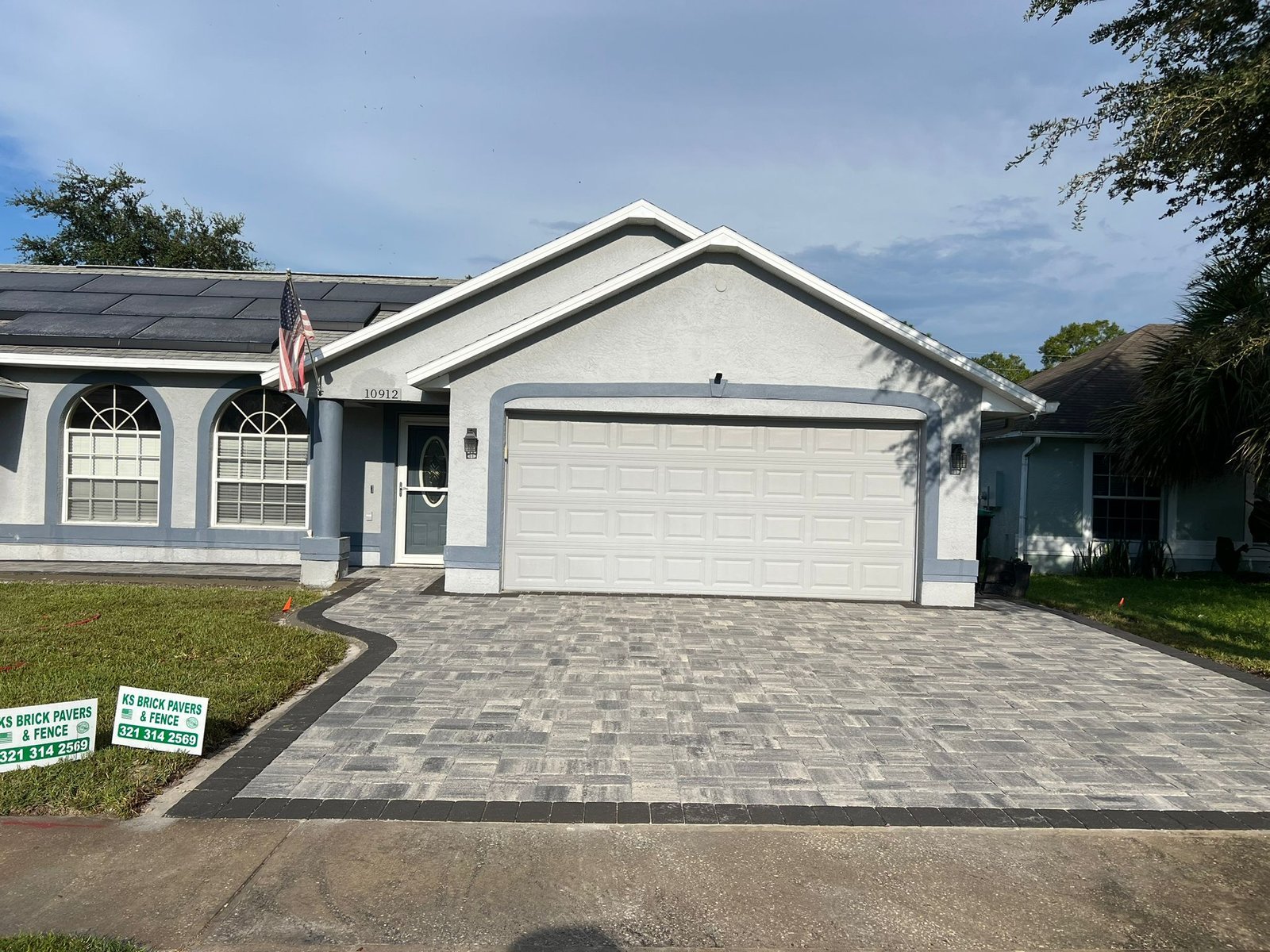
- Driveways and aprons. The highest-visibility hardscape on the property, and the one most affected by root heave from mature oaks.
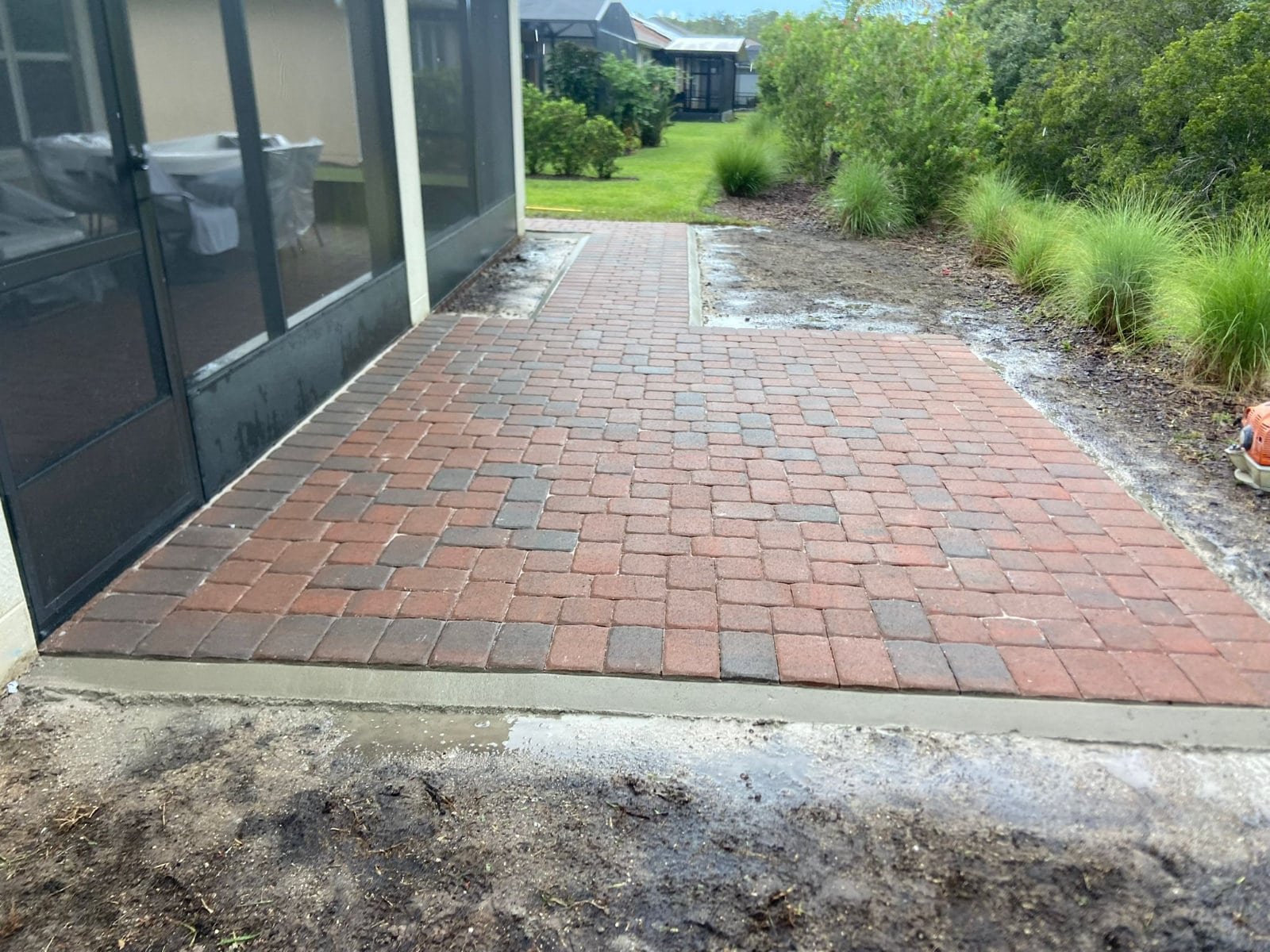
- Walkways and entries. Front approach, side yard access, and the connections between house, pool, and gate.
- Outdoor kitchens and grill surrounds. Built on a paver field so the working area drains and stays cooler than poured concrete.
- Retaining walls and steps. Where the lot carries a grade change, which on Orange County lake lots is more common than people expect.
All of that lives under one service page: brick paver installation. The crew, the base specification, and the permit path are the same whether the finished surface is a patio or a driveway. What changes is the traffic load, the drainage plan, and the paver thickness.
One more thing worth saying plainly. Pavers are not a cosmetic layer laid over concrete. A proper installation is an excavation, a compacted base, a bedding course, and a locked field. If a bid describes pavers being set on top of your existing slab without addressing why that slab failed, you are buying the same failure with a nicer surface on it.
In Central Florida Sand, the Base Is the Whole Job
Orange County sits on sandy, fast-draining soil. That is an advantage and a trap at the same time. The advantage is that water moves down through it instead of ponding on top. The trap is that loose sand has almost no cohesion of its own, so anything you set on it will migrate unless the layer underneath is properly built and mechanically compacted.
A paver field is a system with four parts, and each one fails differently:
- Excavation. Removing enough native material to fit the base, the bedding, and the paver at the finished elevation you actually want. Cut too shallow and the patio ends up above the door threshold or dammed against the house.
- Compacted base. The structural layer. A driveway carries far more load than a walkway and needs a deeper, better compacted base to match. This is where cheap installations cut corners, and it is completely invisible on day one.
- Bedding course. A thin, screeded setting layer. It exists to seat the paver, not to level out a bad base. When an installer uses bedding sand to fix elevation problems, the field ripples within a season.
- Edge restraint and joint sand. The perimeter is what keeps the field locked. Without a proper restraint the outer courses walk outward, joints open, and the pattern loses interlock from the edges inward.
Drainage is the other half of the equation, and in Central Florida it deserves its own conversation. Water has to leave the surface, and it has to leave in a direction that is not your foundation, your neighbor's lot, or a low spot that turns into standing water every July. Slope is designed into the field before the first paver is set. Retrofitting pitch afterward means lifting and resetting.
Tree roots are the third factor, and Orange County has a lot of mature oak. Roots under a driveway do not stop growing because you covered them. Part of an honest assessment is deciding whether the root system gets cut, routed around, or accepted as a future maintenance item. This is exactly where pavers beat poured concrete: when a root does move a section, individual units can be lifted, the base re-graded, and the same pavers reset. A cracked slab has no such option.
What Actually Changes the Price of a Paver Project
We do not publish prices, because a real number depends on your yard and nobody benefits from an invented range. What we can do is tell you which variables move it, so you can read any bid in Orange County, ours included, and understand what you are looking at.
- Square footage, but not linearly. Mobilization, layout, and permitting are close to fixed. A small patio therefore carries a higher cost per square foot than a large one, before anything else is considered.
- Demolition and haul-off. Removing an existing concrete slab is a separate scope from installing pavers. Slab thickness, reinforcement, and how far the debris has to travel to the truck all matter.
- Access. A backyard reachable through a gate wide enough for a machine is a different job from one where every yard of base comes down the side yard by wheelbarrow. This single factor swings labor more than most homeowners expect.
- Grade and drainage work. A flat lot that already sheds water is straightforward. A lot that needs regrading, a drain line, or a wall to hold a change in elevation is not.
- Paver selection. Unit type, thickness, texture, and color all price differently, and thickness is often driven by whether the surface takes vehicles.
- Pattern and cuts. A running bond in a rectangle is fast. Herringbone at 45 degrees against curved pool coping is a great deal of saw time, and saw time is labor.
- Vertical elements. Steps, seat walls, retaining walls, and column bases are built work rather than surface work, and they price accordingly.
The line item people forget is the permit and the association submittal. In Orange County a paver Zoning Permit carries a review by the Zoning Division plus applicable fees, and a community with architectural review adds a second approval track on top of the county one. We fold both into the quote, so there is no surprise and nobody is waiting on a homeowner to chase down a form.
When you compare bids, compare base specification first, drainage plan second, materials third. Two numbers that look far apart on paper are usually far apart underground.
(321) 353-7445Get Immediate Service
HOA and CDD Approval Across Orange County Communities
Orange County has an unusual amount of master-planned housing, and a very large share of newer construction in areas such as Lake Nona, Laureate Park, Horizon West, and Waterleigh sits under a homeowners association, a Community Development District, or both. If you bought a house built in the last twenty years in this county, assume there is an approval body until you confirm otherwise.
The two are not the same thing and they do not do the same job.
- An HOA typically runs architectural review. Paver color, paver style, driveway width, fence material, fence height, and turf are all common items in a design guideline document. Approval usually means a submittal package with a site plan and a product specification.
- A CDD is a special-purpose local government that funds and maintains community infrastructure. It can also carry deed restrictions that limit what you install, which is why a CDD community is able to restrict something the county itself allows.
This is where a lot of Orange County projects stall. The county says yes, the association says not yet, and the homeowner is caught between two calendars. KS Solutions handles the HOA submittal as part of the quote, alongside the county permit, so the two tracks can run in parallel instead of one after the other.
Practical advice before you even call for an estimate: pull your community's current design guidelines. They change. A neighbor who installed a paver driveway four years ago is not proof of what is approvable today, and an approval granted on one lot is not a precedent for yours. Bring the document to the estimate and the whole conversation moves faster.
Rainy Season and Hurricane Season Shape the Build Calendar
Central Florida's rainy season runs from late May into the middle of October, and during that stretch Orlando takes in roughly 61 percent of its annual rainfall, typically as late-afternoon downpours and thunderstorms rather than all-day drizzle. That pattern has a direct effect on hardscape work. Compaction depends on moisture content. Saturated base does not compact correctly, joint sand cannot be locked into a wet field, and an open excavation that fills with water costs a day, not an hour.
Layered on top of that, Atlantic hurricane season officially runs June 1 through November 30, with peak activity between mid-August and mid-October and a statistical peak on September 10, according to the National Hurricane Center. Orange County is inland, so the local concern in that window is wind and rain rather than storm surge. For an outdoor build it still means schedule risk: material deliveries, crew days, and inspection availability all shift when a system is in the basin.
None of this makes summer construction impossible. Crews work through it every year. What it means is that November through April is the calmer, more predictable window in this county, and projects planned into that window tend to run with fewer weather interruptions. If you want a finished pool deck for spring, the conversation starts in the fall, not in March.
We will not promise you a completion date at the estimate stage, and you should be skeptical of any Orange County contractor who does before the permit is in hand. What we will do is tell you honestly which parts of the timeline are within our control and which parts belong to the Zoning Division, the association, and the weather.
Fence Installation in Orange County: Permits, Height, and Wind
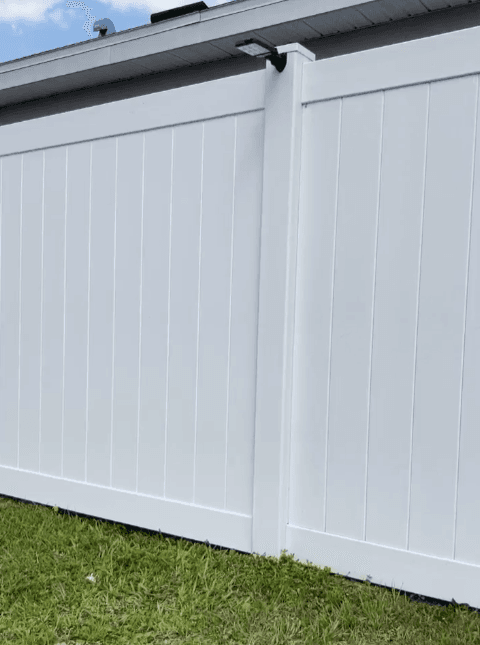
Fence is our second-largest trade in this county, and the permitting is better documented than most homeowners realize. In Orange County, a residential fence up to 6 feet tall requires a Zoning Permit only, reviewed by the Zoning Division. Go above 6 feet, or build the fence out of masonry, and it moves into Building Permit territory with the structural review that implies.
The county publishes the mechanics of that zoning review: approximately 4 business days for review, a base fee of 38 dollars plus applicable fees, and a permit that expires 180 days after approval. That expiration is worth remembering. An approval you sit on for seven months is an approval you no longer have. Questions about a specific parcel go to the Orange County Zoning Division at (407) 836-3111 or Zoning@ocfl.net.
Wind is the other technical piece. Orange County is inland, and the wind design requirements that apply here are less demanding than what the coastal Florida counties enforce, because the county sits below the design wind speed threshold that would put it in a wind-borne debris region. That does not make wind irrelevant. A fence is a solid vertical panel standing in open air, which makes it one of the most wind-loaded things on a residential lot, and the taller the panel, the more load it carries down into the posts. Post depth, post spacing, and footing size are engineered against that load rather than guessed at. A solid privacy panel catches far more wind than an open picket or an aluminum section, which is why the same fence line can need different post spacing depending on the style you pick. Masonry walls are a different structural conversation again, which is part of why the county reviews them as a building matter instead of a zoning one.
Our team handles the entire process, including submitting plans, paying permit fees, and scheduling inspections. On the material side, fence installation covers privacy, decorative, and security fencing, plus gate integration so the gate works with your driveway and, where relevant, your paver approach. If you are doing both a fence and a driveway, sequencing them together saves a second mobilization and keeps the gate swing from fighting the finished elevation.
Artificial Turf and Ongoing Maintenance in Orange County
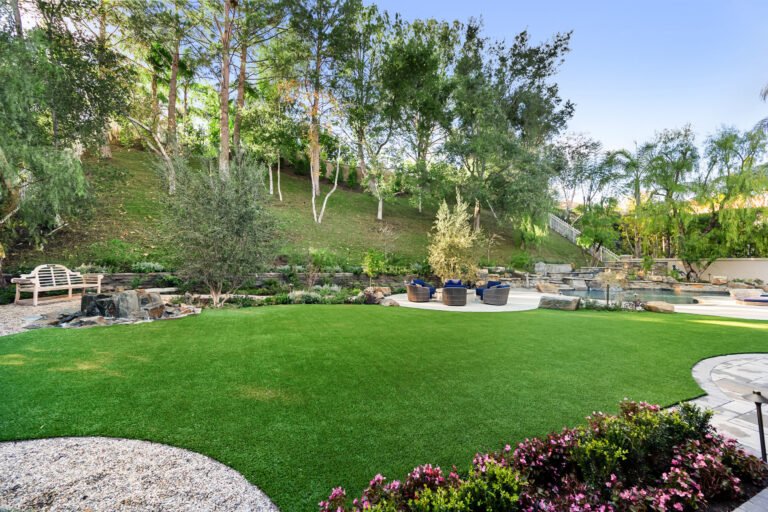
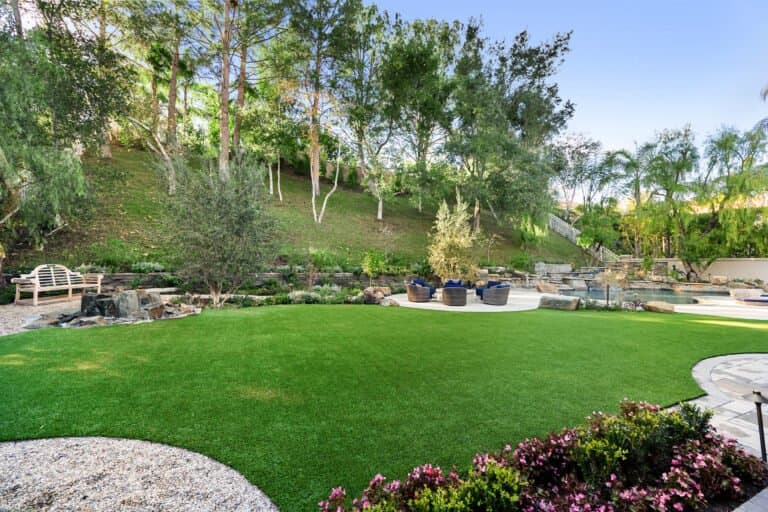
Artificial turf in Florida had a legal question mark over it for years. That changed in June 2025, when the governor signed a state law that settled it. Counties and cities, Orange County included, can no longer ban synthetic grass on single-family properties of up to one acre, as long as the material meets the Florida Department of Environmental Protection standards covering material type, permeability, stormwater drainage, and potable water conservation. In practice that removes the first question most homeowners here ask, which is whether the local government can make them tear it out later.
Two honest caveats, because this is where bad advice circulates. First, the law preempts local government, not private deed restrictions: Community Development Districts can still restrict turf through their own restrictions, which is directly relevant across the CDD-heavy parts of this county. Second, the state environmental standards the law points to are a real requirement, so the product needs to be chosen with them in mind rather than assuming every roll on the market qualifies.
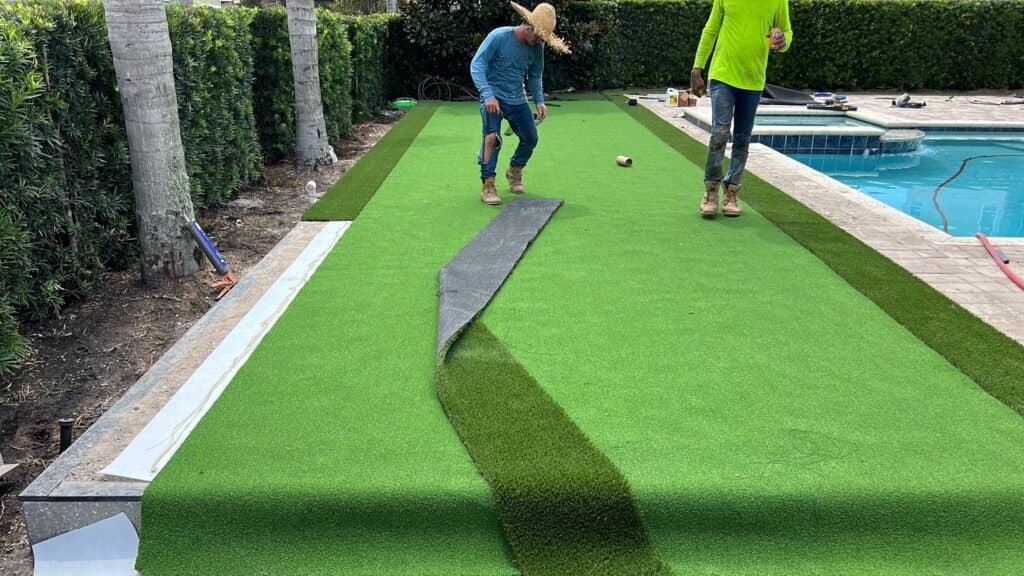
Why homeowners here want it anyway is not complicated. Central Florida heat and the rainy season are hard on natural lawns, shaded areas under mature oaks never fill in properly, and pets destroy the same patch of yard every single year. Artificial turf installation covers residential and commercial applications, pet areas, playgrounds, and sports surfaces, and the work underneath has more in common with a paver installation than with laying sod: excavation, compacted base, drainage, and a locked perimeter.
Once hardscape is in, it is not finished forever. Joint sand migrates, especially after heavy rain. Paver surfaces pick up organic staining under tree canopy. Fence hardware loosens. Turf infill needs grooming in high-traffic lanes. Maintenance plans exist for exactly that, covering paver, fence, and turf care on a schedule instead of a panic call three years later when the joints are empty and weeds have found them. Rainy season is precisely when a neglected paver field starts losing sand, so the maintenance calendar in this county is not arbitrary.
Choosing a Paver Contractor in Orange County, and Where We Work
Orange County has no shortage of people who will install pavers. The questions that separate them are boring and effective:
- Who pulls the permit? If the answer is that you do, or that this project does not need one, walk away. Orange County requires a permit for paver installation.
- What is the base specification? A contractor who cannot describe excavation depth, base material, and compaction method for your specific use is quoting a surface, not a structure.
- Where does the water go? Ask them to point at the ground and show you the direction of fall. If they cannot, drainage has not been designed.
- Who handles the HOA? An architectural submittal that lands back on the homeowner is a project that stalls.
- What happens if a section settles? The correct answer involves lifting and resetting the affected area, not adding a topping over it.
- Are edge restraint and joint sand specified? They are two of the cheapest components in the system and two of the most commonly skipped.
KS Solutions works across Orange County from Orlando outward: Winter Garden, Ocoee, Apopka, Winter Park, Maitland, Windermere, Oakland, Belle Isle, Edgewood, and Eatonville, plus the unincorporated communities where much of the county's newer housing sits, including Dr. Phillips, Bay Hill, Lake Nona, Laureate Park, Horizon West, Waterleigh, Hunter's Creek, Avalon Park, Alafaya, and Union Park.
We cover the surrounding counties too, and the closest match for your address may not be this page. See Seminole County to the north, Osceola County to the south, Lake County to the west, Polk County to the southwest, and Volusia County to the northeast.
If you are ready to talk about a specific yard, the useful first step is a site visit. Bring your association's design guidelines if you have them, point at the wet spot, and tell us what the space needs to do. The permit, the submittal, and the base specification are our problem from there.