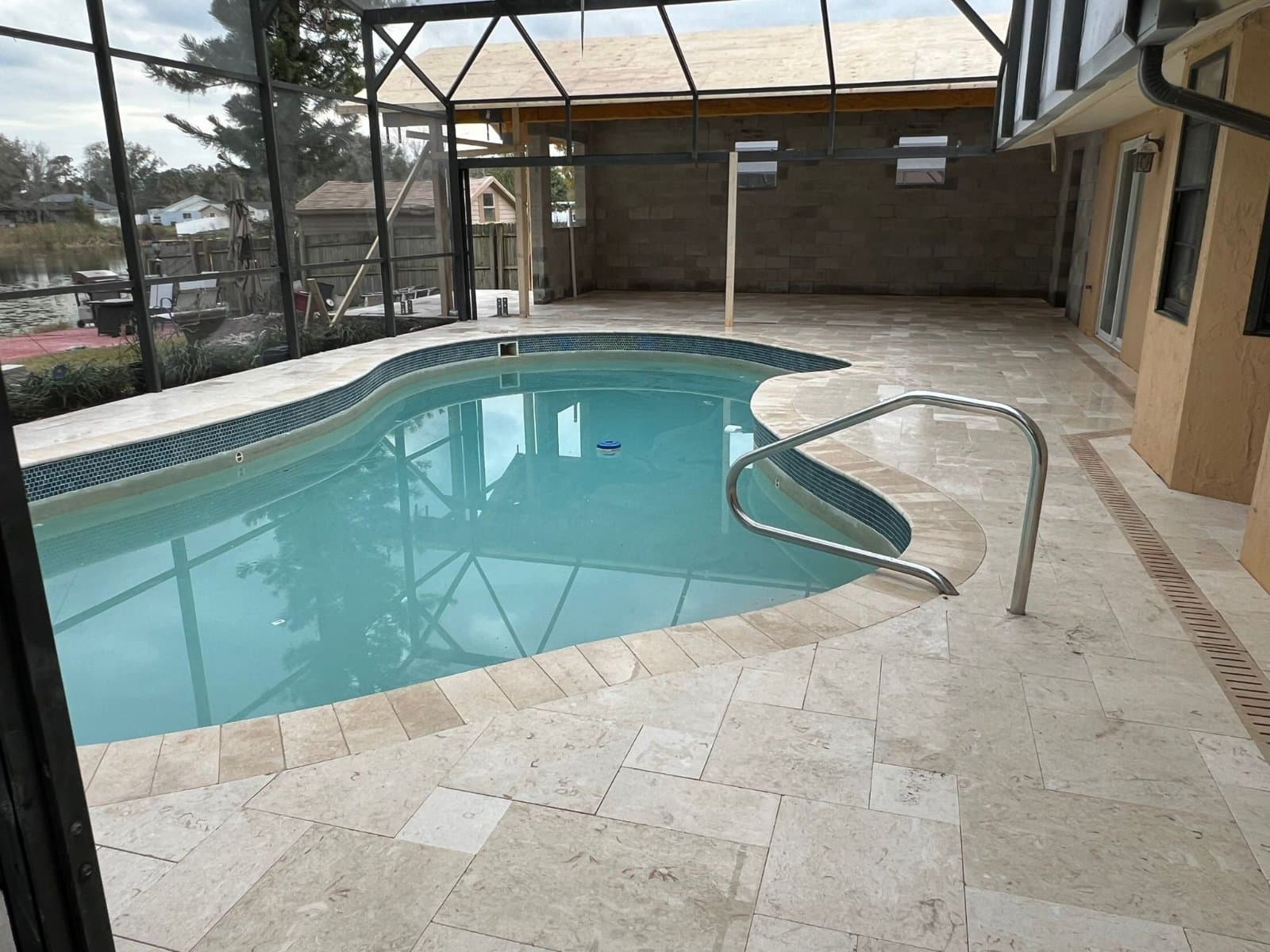
What Goes Under a Paver Driveway or Patio in Volusia County
Most of the failed paver jobs homeowners show us are not paver failures at all. The stone is intact. What moved is the base underneath it. Soil conditions are not uniform across a county this size, and two lots on the same street can behave differently once you dig. That is forgiving in some yards and punishing in others, and the only honest way to know which one you have is to open the ground and look.
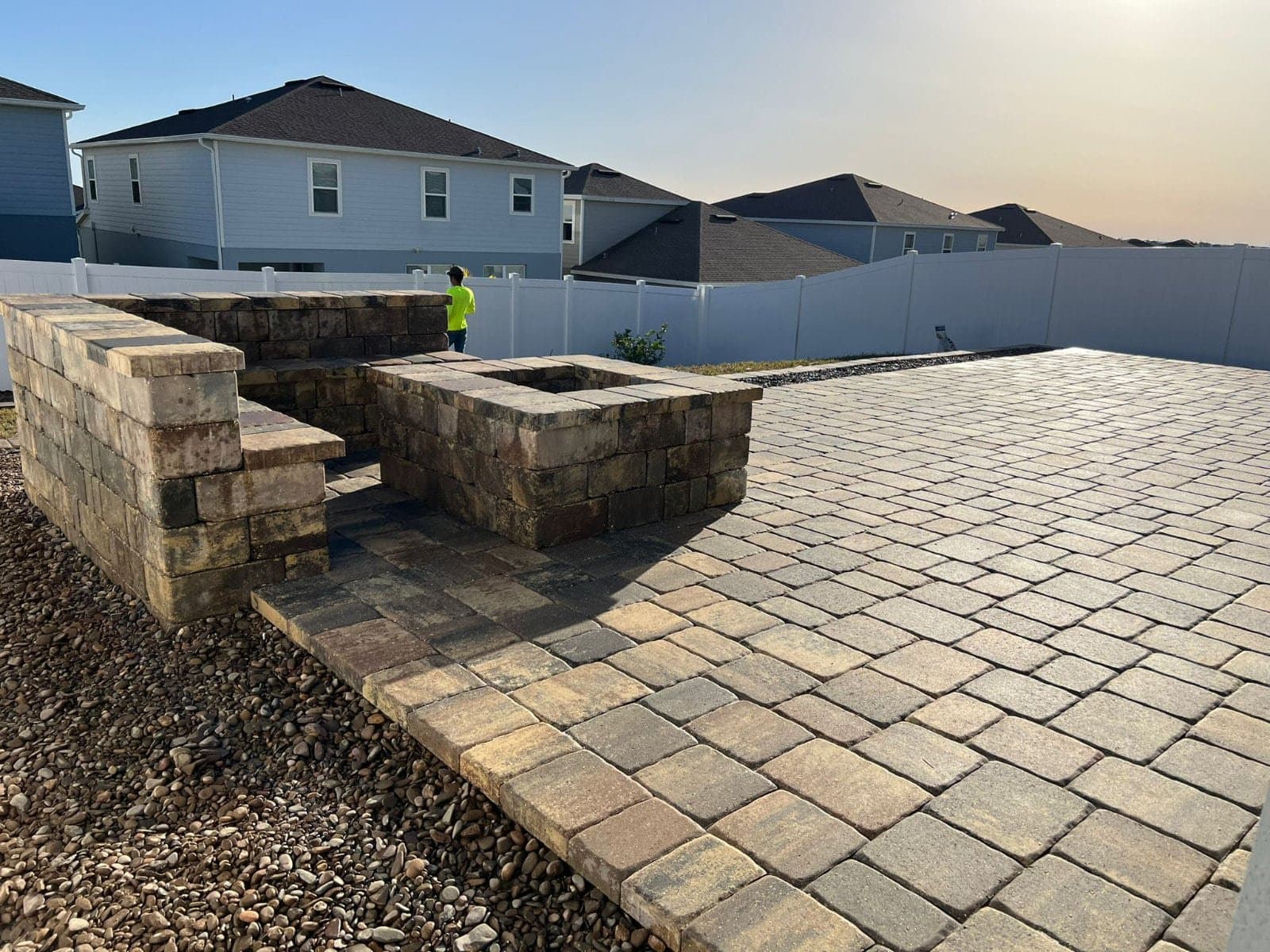
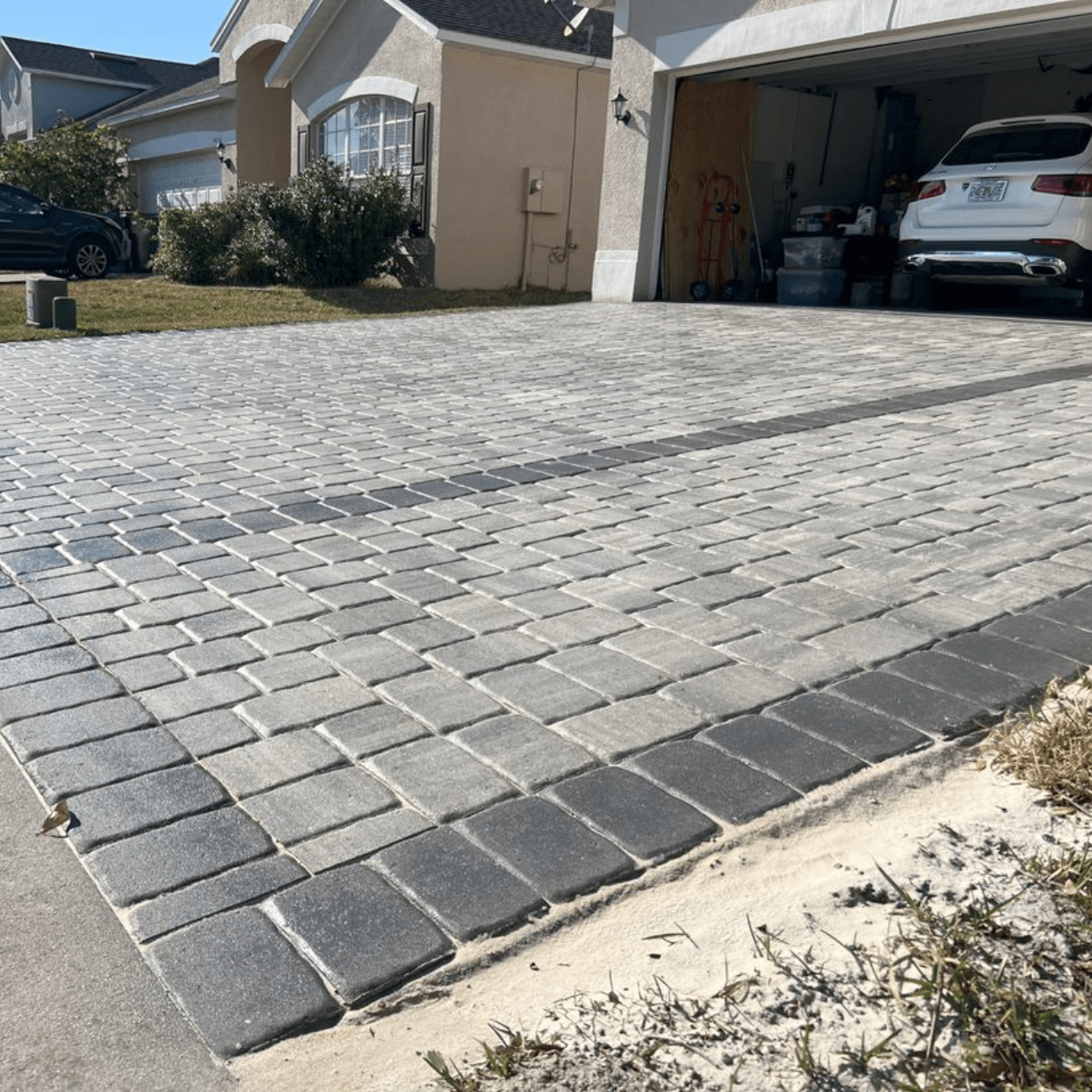
A paver installation is really four layers, and only one of them is visible. The subgrade gets excavated and compacted. A crushed base goes in above it, placed in lifts and compacted in each lift rather than dumped at full depth and rolled once. A bedding layer of sand is screeded flat. Then the pavers are laid, cut in at the edges, restrained on every open side, and locked with joint sand. Skip the compaction in lifts, or skip the edge restraint, and the job looks perfect on handover day and starts drifting within a season.
Depth matters, and it changes by use. A patio that carries patio furniture and foot traffic does not need what a driveway needs. A driveway that will hold a truck, a boat trailer or an RV needs more base and often a different paver thickness. When someone quotes a driveway at patio depth, the price looks great and the ruts show up under the tire tracks a year or two later.
Drainage is the other half. Water has to leave the surface, and it has to leave it somewhere sensible: away from the slab, away from the pool cage footings, and not into a neighbor's yard. On flat lots that means building fall into the surface deliberately. On lots that already pond, it can mean a drain line, a dry well or reshaping the grade before a single paver is set. We would rather solve that during excavation than come back and lift finished work.
Our full scope for this work is on the brick paver installation page, which covers patios, pool decks, driveways, outdoor kitchens, retaining walls and elevated paver decks under one service.
Driveway Aprons and the County Right of Way Permit
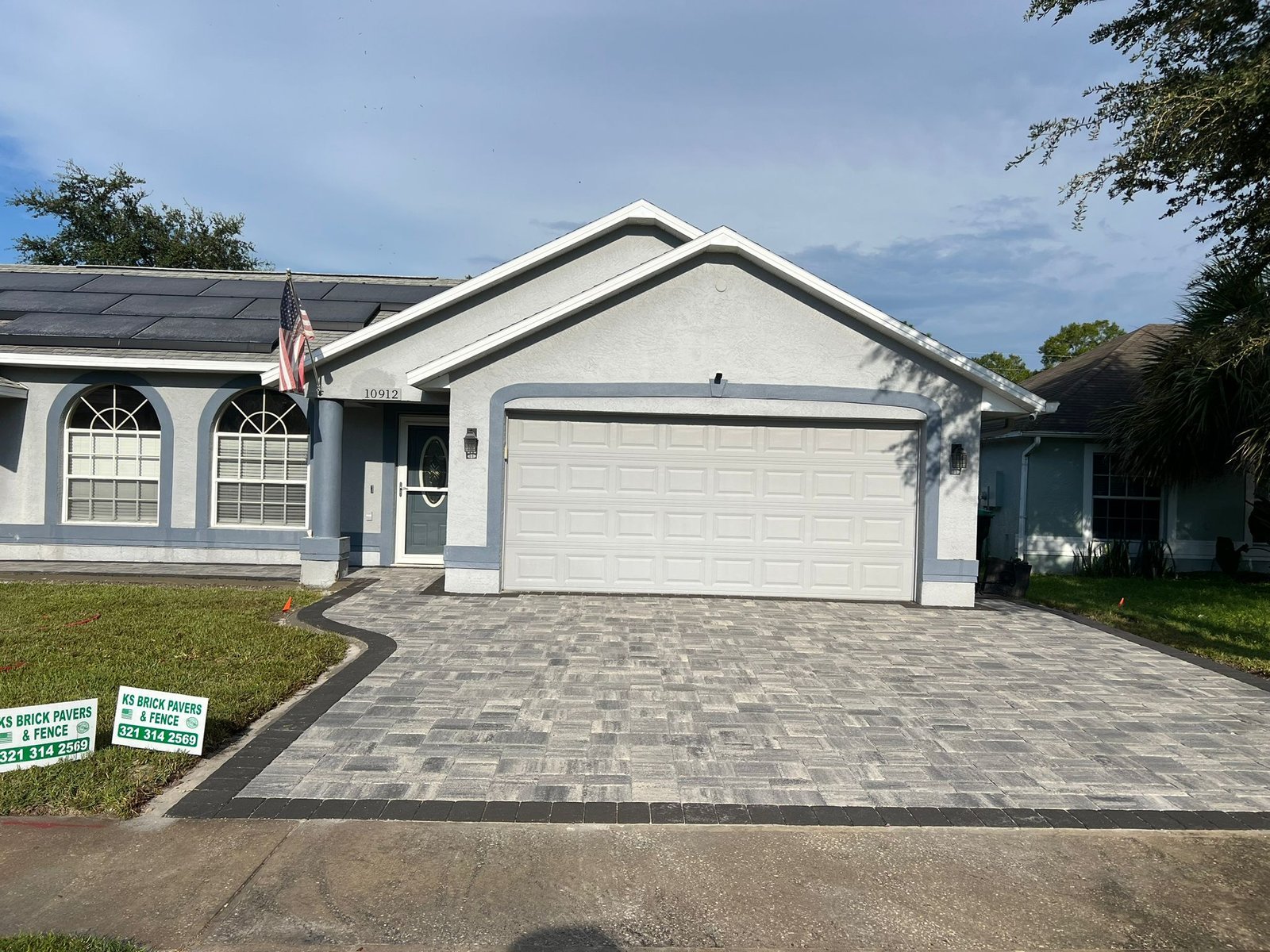
This is the part of a Volusia County paver project that surprises people, so it is worth spelling out. The section of your driveway that crosses the sidewalk and meets the road is usually in the public right of way. It belongs to the county, not to you, even though you drive over it every day. Putting pavers there is allowed, but it goes through a Right of Way Use Permit rather than being treated as ordinary work on your own lot.
Volusia County publishes what it wants for that. Three things stand out:
- The work has to be done by a licensed contractor.
- The plans have to include a Paver Detail Sheet showing how the apron is actually built.
- The property owner has to sign a Hold Harmless and Release form, have it notarized, and have it recorded with the Volusia County Clerk of Court before the permit is issued.
That last one is the step that catches homeowners off guard. It is not a form you scan and email. It involves a notary and a recording at the Clerk of Court, and it has to be done before the permit comes out, not after the trucks arrive. If you are pricing an apron in pavers, build that into your timeline.
The reason the county asks for it is straightforward. Anything in the right of way may have to be taken up someday for utility work or road work, and the county wants it on record that the owner understands that. It is not a reason to avoid a paver apron. It is a reason to have someone handle the paperwork properly, in the right order.
On our side, permit and HOA submittals are handled as part of the quote, so you are not the one chasing a notary and a recording clerk between work meetings. What we will not do is tell you a permit is unnecessary because a project sounds small. Whether a specific patio or pool deck needs a building permit gets confirmed with the county before we submit, not assumed.
What Actually Changes the Price of a Paver Project
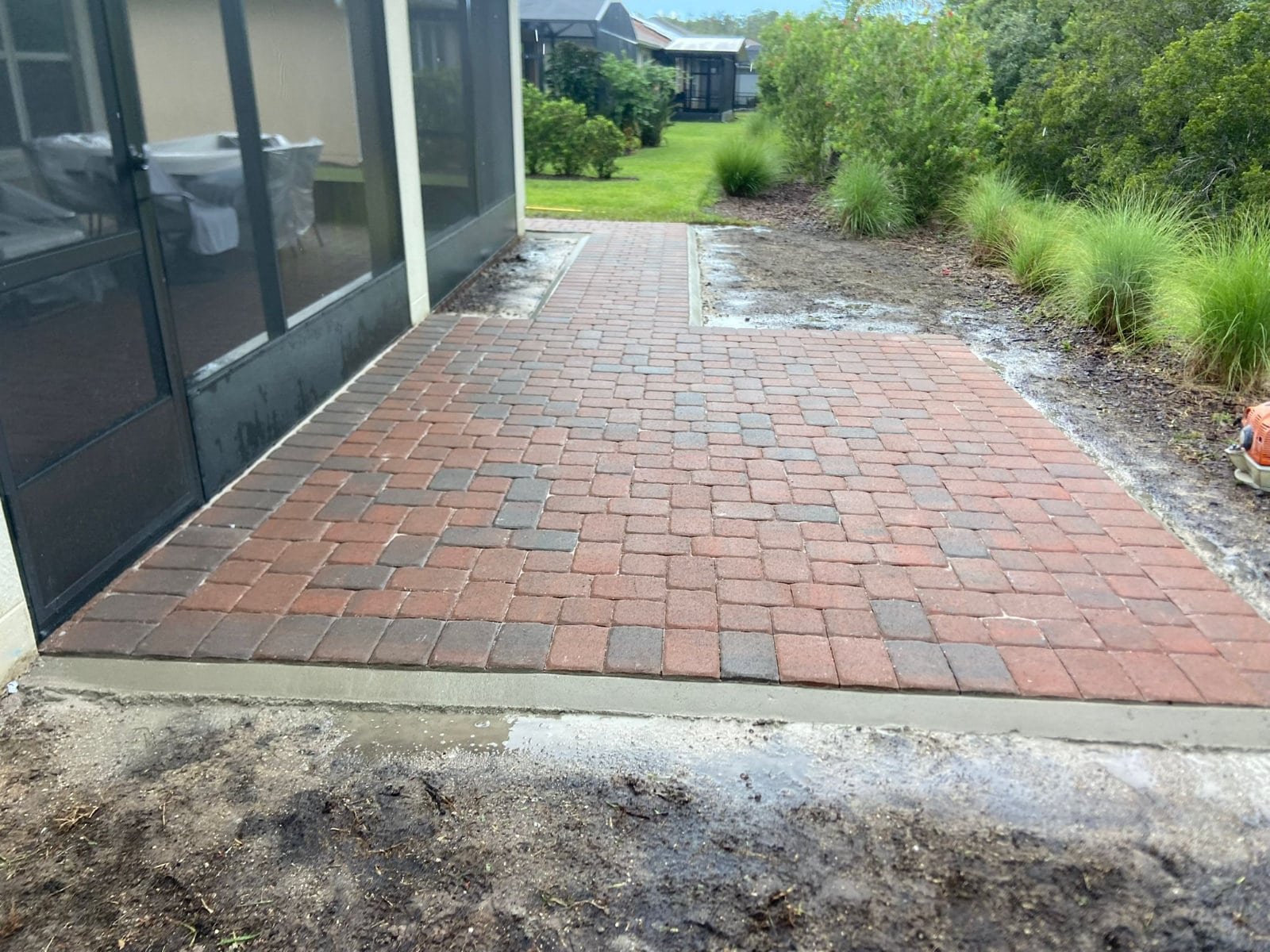
Two driveways of the same square footage can be very different jobs. Here is what moves the number, in rough order of impact.
Demolition and disposal
Tearing out and hauling old concrete is heavy, slow work, and it is charged accordingly. A bare sand lot with nothing to remove is a cheaper starting point than a cracked slab that has to be broken up, loaded and hauled away.
Base depth and soil condition
If we open the subgrade and find soft, wet or organic material, it has to come out and be replaced with something that compacts. That is not an upsell, it is the difference between a surface that stays flat and one that dips. Any contractor who prices a job without a plan for what is under it is pricing a guess.
Access
A backyard pool deck behind a narrow side gate is a different job than an open driveway. If material has to be wheeled instead of dumped, or if a fence panel has to come down and go back up, labor goes up with it.
Pattern and cuts
A running bond in a rectangular area is efficient. Herringbone at forty five degrees, circle kits, contrasting borders and curved edges all add cutting time and waste. Herringbone earns its cost on driveways because the interlock resists tire turning forces better than a stack pattern, so it is often worth it, but it is not free.
Drainage and elevation work
Grading corrections, drain lines, dry wells and retaining walls are their own scope. A yard that already ponds will always be more expensive to hardscape than a yard that sheds water on its own.
Paperwork and site conditions
A right of way apron with a recorded Hold Harmless, or an HOA architectural submittal with drawings and material samples, takes real time to prepare. Coastal parcels can carry additional technical requirements that inland parcels do not.
We will not publish a per square foot number on a page, because a number without a site visit is a number that changes on you later. What we can promise is that the quote explains which of the above applies to your lot.
Fence Rules in Volusia County Changed in 2025
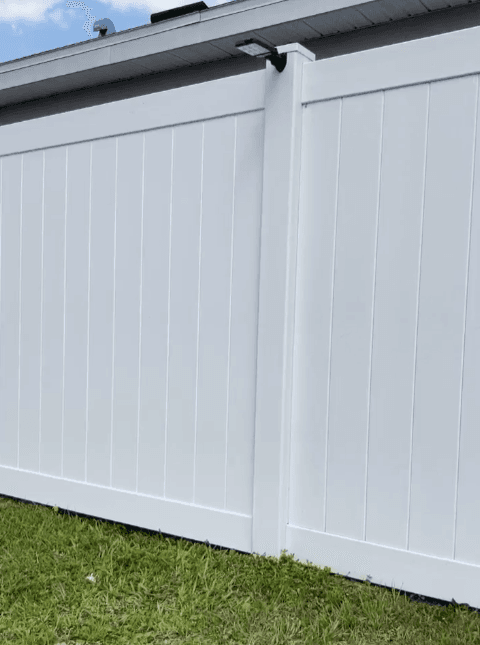
If you researched fence permits here a few years ago, your information is out of date. Effective June 5, 2025, Volusia County's Ordinance 2025-13 removed the building permit requirement for most residential fences in unincorporated Volusia County.
Two limits on that matter more than the headline:
- It applies only to unincorporated county. Cities inside Volusia, including Daytona Beach, DeLand, Deltona and Ormond Beach, set their own fence rules. If your address is inside city limits, the city's requirements govern, not the county's exemption.
- It does not apply when the fence serves as a pool safety barrier. In that case a permit is still required.
The pool barrier carve out exists because a pool fence is a life safety device with a state standard behind it. Florida Statute 515.27 sets requirements for residential pool safety barriers, including a minimum height of 48 inches and gates with self closing and self latching hardware, along with other specifications. That state requirement sits above the county's general permit exemption. In plain terms: a fence that happens to be near a pool and a fence that legally functions as the pool barrier are two different projects with two different standards.
So the first question we ask on a fence quote is not what style you want. It is where the property line sits relative to city limits, and whether the fence is doing barrier duty for a pool. That determines the permitting path before material ever gets discussed.
When permits and inspections are part of the job, our team handles the entire process, including submitting plans, paying permit fees and scheduling inspections. Style, height, material and gate placement come after the rules are settled, not before. Full scope is on the fence installation page, covering privacy, decorative and security fencing along with gate integration.
(321) 353-7445Get Immediate Service
Artificial Turf, HOAs and What Florida Law Protects
Homeowners here ask the same question about turf almost every time: can my city or my HOA stop me. Florida law has moved in the homeowner's favor on both fronts, and it is worth knowing where the lines are.
Florida Statute 125.572, which came out of HB 683 and was signed in 2025, limits how far counties and municipalities can go in banning or heavily restricting synthetic turf on residential properties of up to one acre, provided the product meets standards defined by the Florida Department of Environmental Protection. That is a meaningful shift. Turf is not something a local government can simply prohibit outright on a typical residential lot anymore, as long as the product qualifies.
Florida Statute 720.3045 works on the HOA side. It prevents homeowners associations from prohibiting installations, including artificial turf, in parts of the lot that are not visible from the street or from an adjacent lot, unless a general law or local ordinance says otherwise. In practice that means your back yard behind a privacy fence has considerably more freedom than your front yard, which is still subject to normal architectural review.
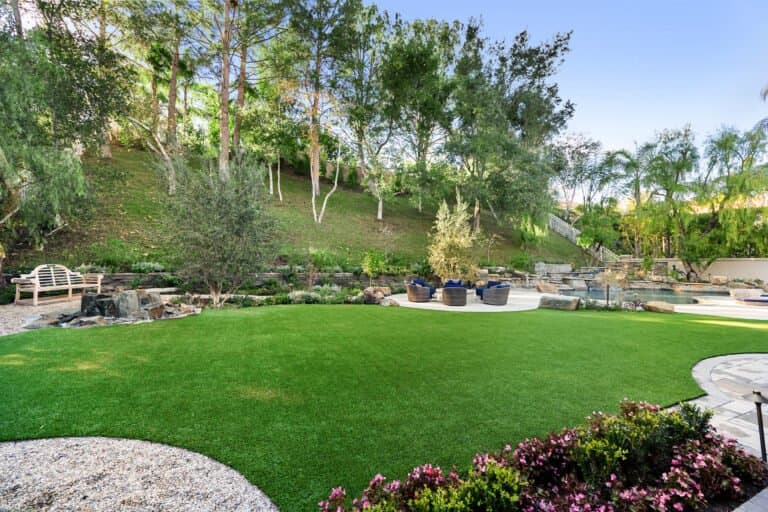
Where turf earns its keep in this county is the ground that grass hates: the shaded strip along the north side of the house, the dog run that turns to bare dirt, the pool surround where clippings blow into the water, the play area that gets pounded every afternoon. It also removes the irrigation and mowing cycle from that area entirely.
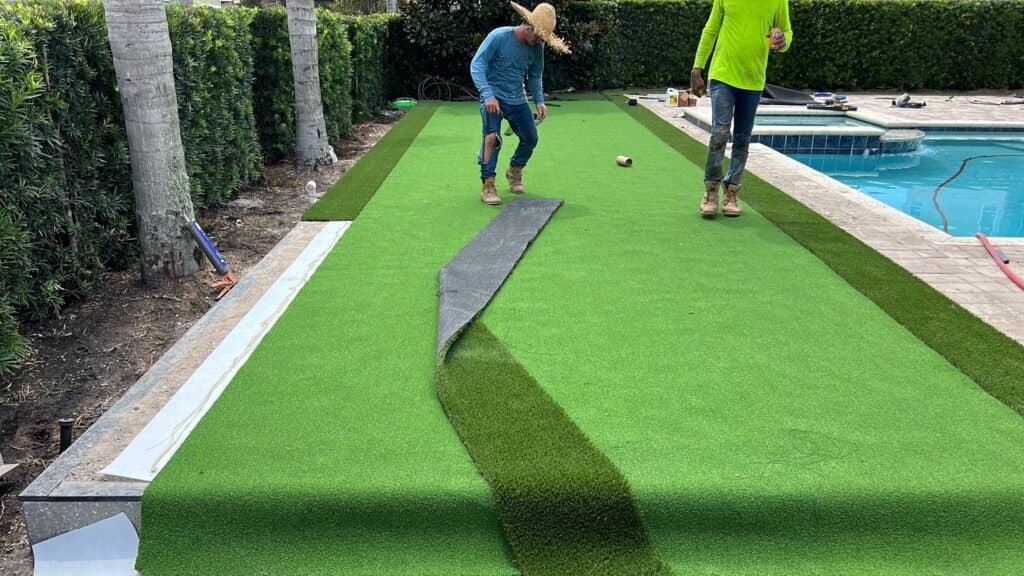
Installation still decides whether it looks right in year five. Turf sits on a compacted, permeable base with proper fall so water leaves rather than sitting under the backing. Seams get planned so they do not land in the middle of a sight line. Perimeters get anchored. Infill gets chosen for use, and pet areas get treated differently than a putting surface. Details are on the artificial turf installation page.
Wind, Flood Zones and the Coastal Side of the County
Volusia County has real beachfront, and the building requirements reflect it. The county has adopted the Florida Building Code, with subsequent updates that include revised wind speed maps, and it expects construction to be designed against those maps. In coastal high hazard flood areas designated Zone VE, the code calls for open foundations and breakaway walls, and FEMA elevation certificates are required for new construction in Special Flood Hazard Areas.
What that means for outdoor work is simple to state and easy to get wrong. A fence, a pergola or an elevated paver deck near the coast may face additional technical requirements for wind and flood that the same structure a few miles inland does not. Post depth, post spacing, panel selection and hardware are not universal across the county. A design that is entirely appropriate in DeLand may need to change on the beachside.
Salt air is the second coastal factor. Fasteners, gate hardware and hinges corrode faster near the water, and the cheapest hardware is where a fence fails first. Choosing material for the environment is not a luxury upgrade on the barrier island, it is what keeps a gate swinging in year three.
The county also publishes wind speed mapping used for building construction, which is the reference point rather than any rule of thumb. We check the address, not the general area. Two properties in the same zip code can land in different requirements.
Timing a Project Around Storm Season
Volusia County Emergency Management describes hurricanes as the most common disaster threat the county faces. The Atlantic hurricane season runs from June 1 to November 30. The county's own hazard picture splits into coastal risk, meaning storm surge, high tides and rapid flooding, and inland risk, meaning sustained rainfall, flooding of low lying areas and wind damage. Both sides of that map are inside Volusia.
The county uses evacuation levels A, BC and DE, tied to expected flooding severity, and it publishes an interactive map so residents can look up their own zone rather than guess from a description. Storm surge potential ranges from roughly 7 feet above sea level in a category 1 event to as much as 28 feet in a category 5. If you do not know your level, the county map is the place to check it, not a contractor's opinion.
How that translates into scheduling:
- Drainage work first. If a project includes grading corrections or drains, doing it before the wet months is worth more than doing it after.
- Expect weather days in summer. Compaction, bedding and joint sand all care about moisture. A crew that pushes through a downpour to stay on schedule is building a problem into your base.
- Fences take wind, not water. Panel type, post depth and gate hardware are the variables that decide how a fence behaves in a blow.
We install year round. The point is planning the sequence around the calendar instead of pretending the calendar does not exist.
Cities and Communities We Cover in Volusia County
Volusia is a large county with very different building environments inside it, which is exactly why the permitting answer changes by address. We work across the county, including:
- Beachside and coastal: Daytona Beach, Daytona Beach Shores, Ormond Beach, New Smyrna Beach, Ponce Inlet
- Halifax area: Port Orange, South Daytona, Holly Hill
- West Volusia: DeLand, DeBary, Orange City, Lake Helen
- Southeast and rural: Edgewater, Oak Hill, Pierson
- Deltona and the unincorporated areas between them
The city versus unincorporated distinction is not a technicality here. The 2025 fence permit exemption applies to unincorporated county only, and Daytona Beach, DeLand, Deltona and Ormond Beach each maintain their own rules. Separately, Volusia County repealed its county level Local Business Tax Receipt requirement effective January 1, 2024, and no longer issues that document or requires a copy of it for contractor listing, though individual cities may still require their own. That is our paperwork rather than yours, but it is one more reason city limits matter on this side of the state.
Planned communities add a third layer. Latitude Margaritaville Daytona Beach, the 55 plus Minto community on LPGA Boulevard, sold the last of its 3,763 homes by May 2025 and carries both HOA fees and a Community Development District assessment that appears as a separate line on the county property tax bill. Communities built on that model typically run architectural review on anything that changes the exterior, which can affect fence material and height, paver color and pattern, and whether turf is permitted in a visible area. If you are in a community like that, the submittal is part of the job and we treat it that way.
We also serve neighboring counties, with dedicated pages for Seminole County, Orange County, Lake County, Osceola County and Polk County.
After the Install: Maintenance and Choosing Who Does the Work
Hardscape does not need much attention, but the little it needs is specific. Joint sand settles and gets washed out by rain and pressure washing, and joints that empty out let pavers shift. Sealer is optional and depends on the stone and the look you want, but it is not a fix for a base problem. Fences need hardware checked, especially gates, which take more abuse than any panel. Turf needs its infill kept level in high traffic lanes and its perimeter checked after heavy weather.
Our outdoor maintenance plans exist so that work happens on a schedule instead of after something has already moved. Cleaning, joint sand replacement, resealing where appropriate, fence hardware checks and turf grooming all fall under it.
If you are comparing contractors here, a few questions separate the serious ones quickly:
- Ask what base depth they are quoting and why. A driveway number and a patio number should not be the same.
- Ask whether the driveway touches the right of way, and whether they have handled the notarized, recorded Hold Harmless before. If the answer is vague, they have not.
- Ask who pulls the permit and who schedules the inspections. On our jobs, permit and HOA submittals are handled as part of the quote, and on fence work the team submits plans, pays permit fees and schedules inspections.
- Ask what happens if the subgrade is bad. The right answer is a plan, not silence.
- Ask whether they have worked inside your city or inside your HOA. Rules differ by jurisdiction in this county, and it shows.
KS Solutions covers all four services in house across Volusia County: brick pavers, fences, artificial turf and ongoing maintenance. That matters when a project touches more than one, which most backyards do. A pool deck that ends at a fence line, with turf filling the shaded corner, is one plan and one crew rather than three contractors pointing at each other. Tell us the address and what is bothering you about the space now, and we will tell you what the ground, the code and the calendar say about it.