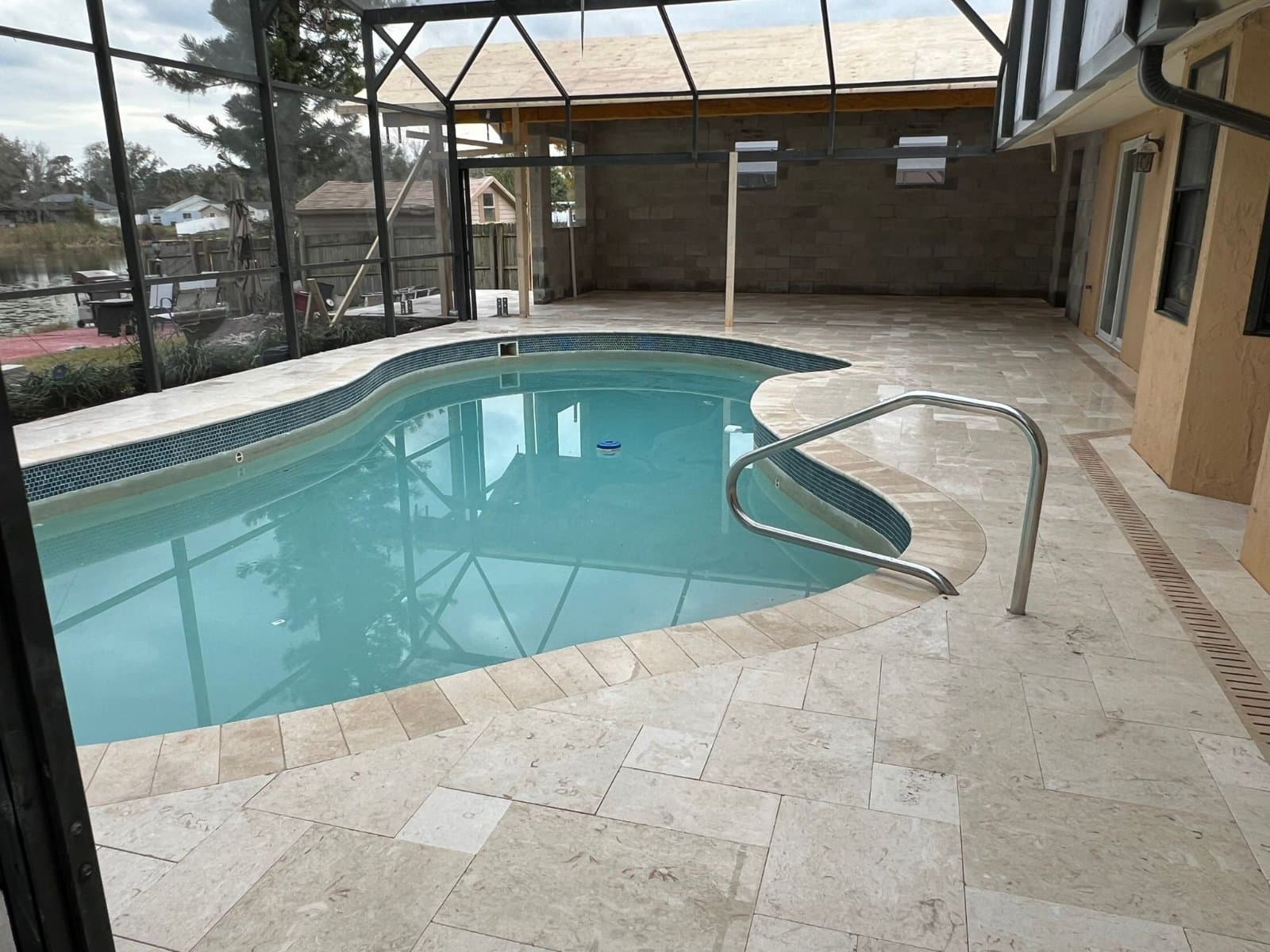
Paver Work in Polk County Starts Below the Surface
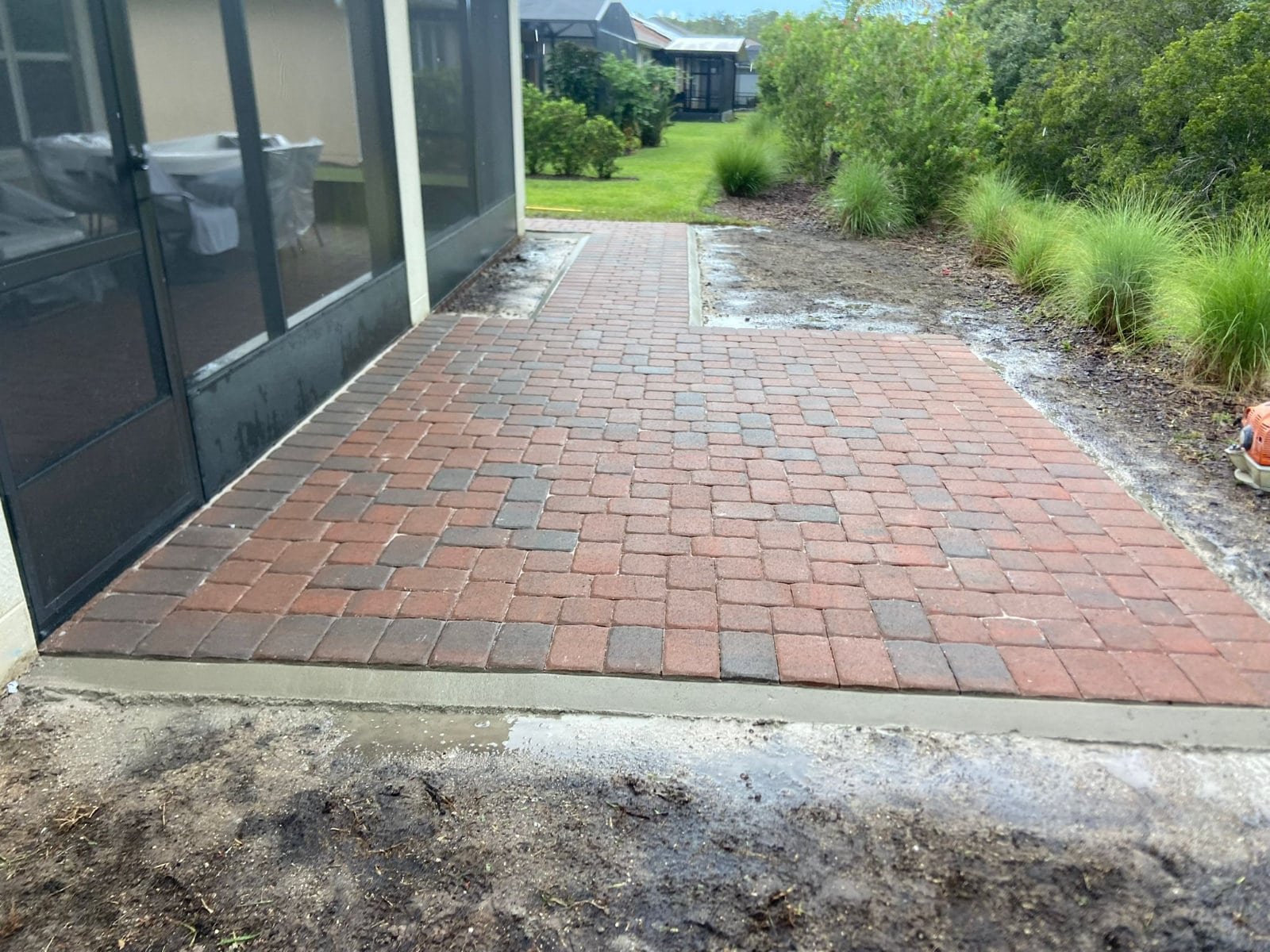
The pattern on top is what gets the compliments. The base underneath is what decides whether the surface is still flat in ten years. That is true of paver work anywhere, and there are reasons to take it more seriously in this county than in most places.
Polk County sits on limestone. Geologists point to the county as sinkhole prone, and they tie that to the limestone bedrock combined with a long history of phosphate mining and decades of changes to drainage and the water table. We are not going to tell you that a patio causes ground movement or prevents it. Neither claim would be honest. What we will say is that ground with a reputation for behaving unpredictably is a good reason to treat excavation, compaction and drainage as the main event instead of a formality before the fun part.
A paver surface built properly follows the same sequence every time:
- Strip the organics. Topsoil, roots and old sod hold water and rot. Anything that can decompose has to come out before base goes in, or the surface settles as the material below it disappears.
- Excavate to the depth the use requires. A walkway and a driveway that parks a work truck are not the same job, and they should not get the same hole.
- Build the base in lifts and compact each one. Dumping the full depth of crushed base and running a plate compactor over the top of it compacts the top few inches and leaves the rest loose. Loose base is a slow leak in the project.
- Screed a consistent setting bed, then lay and cut. Cuts along curves and edges are where sloppy work shows up first, because the eye follows a line.
- Lock the perimeter with edge restraint. Pavers move outward under load. Without restraint the field spreads, joints open, and sand washes out.
- Compact the surface and fill the joints. Joint sand is structural, not cosmetic. It transfers load between pavers so the surface acts as one flexible pavement.
Skipping steps does not produce a patio that fails next month. It produces one that looks perfect for two seasons and then develops a dip at the low corner, a ridge where a wheel turns, or a line of loose pavers along an unrestrained edge. When you get quotes, ask each contractor how deep they are excavating and how many compacted lifts of base they are installing. The answers will not all match, and the difference tells you a lot about what you are actually buying.
Where We Work Across Polk County
Polk County is large and it is not one market. Lakeland and Winter Haven are established, with mature lots, older landscaping and yards that usually need demolition before anything new goes in. The northeast quadrant is a different job entirely.
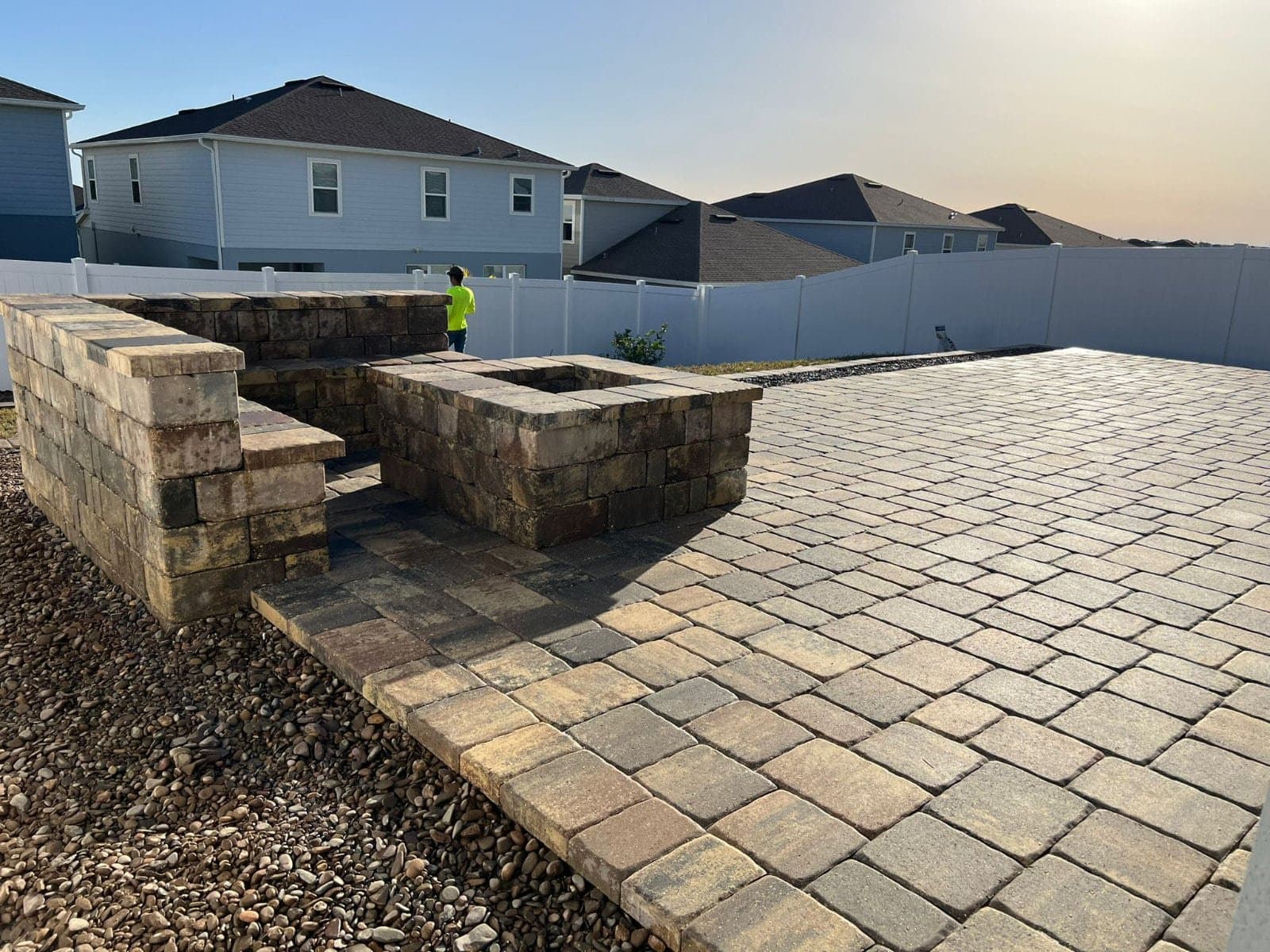
Davenport, Haines City and Auburndale are among the fastest expanding areas in the county. Buyers priced out of Tampa and Orlando keep moving along the Interstate 4 corridor looking for something more affordable, and thousands of new homes go up every year to meet them. Those houses hand over a backyard with sod, a builder patio slab that is barely large enough for a grill, and nothing else. That is the most common starting point we see: a family that has been in the house six months, has run out of patience with a yard they cannot use, and wants to know what a real outdoor space costs.
One local detail worth planning around: many of the newer communities in the Haines City and Davenport area are financed by a Community Development District on top of having their own homeowners association. Residents in those neighborhoods often pay CDD fees and HOA dues at the same time, and they can face review from more than one direction. It does not stop a project. It does mean the approval path is worth mapping before you order material rather than after.
If your property sits along the SR 17 Ridge Scenic Highway corridor, there is an overlay in place with its own rules. The one that most often surprises owners is fence height, covered further down this page.
We also serve the neighboring counties, and if your search brought you here but your house is over a county line, start with the right page: Osceola County, Orange County, Lake County, Seminole County or Volusia County.
Permits, HOA Packets, and the Paperwork Nobody Enjoys
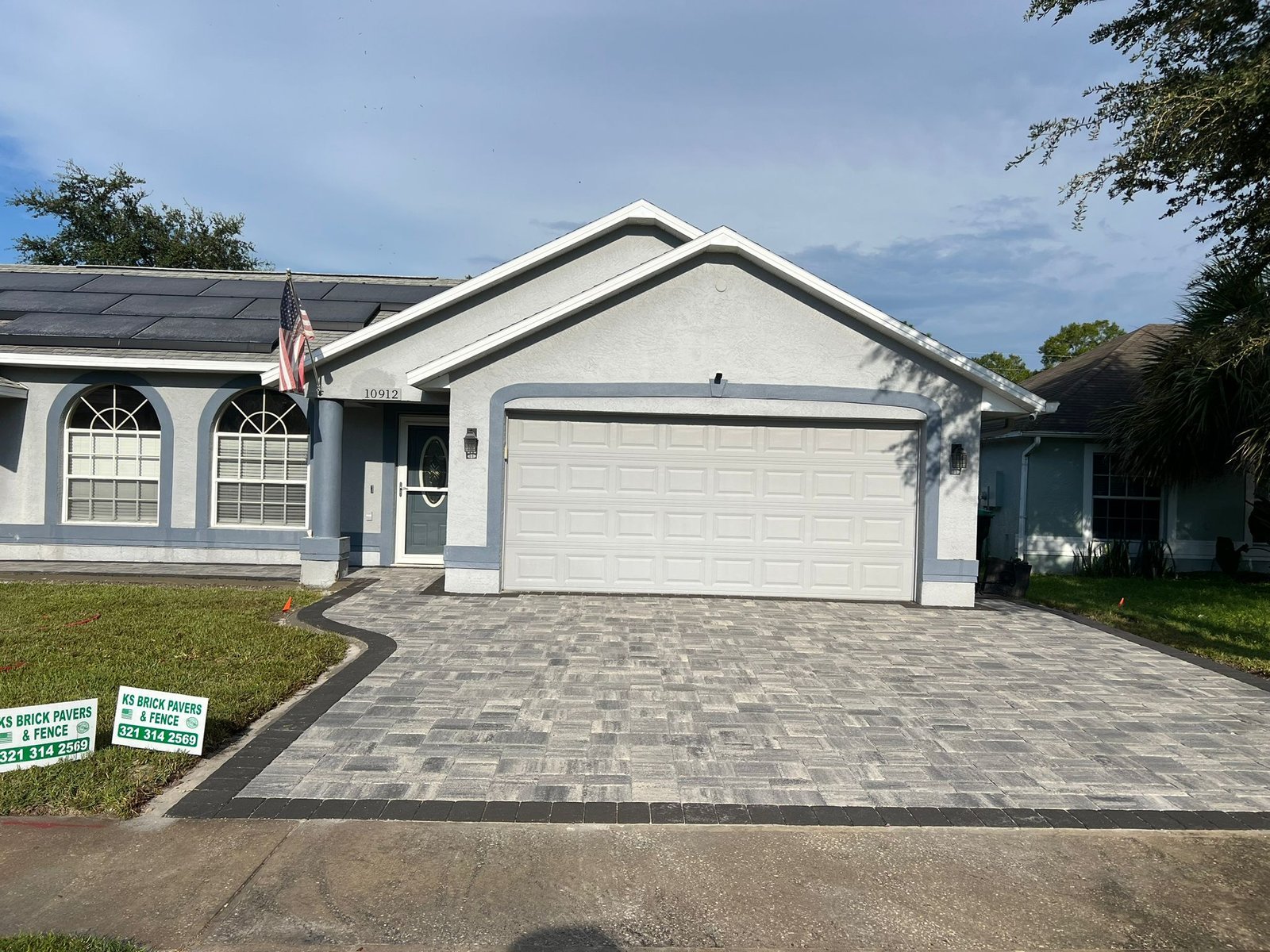
This is the part of an outdoor project that stalls it. Not the install. The approvals.
Start with state law, because it changed recently. As of July 1, 2026, Florida HB 803 requires local governments, Polk County included, to exempt single family residential work valued under $7,500 from permitting when the owner submits a written request. That sounds like a clean escape hatch, and for some small projects it is. Two limits matter more than the headline. The exemption does not apply to properties in a FEMA flood hazard area, and you cannot break a larger project into smaller pieces to slide under the threshold. A patio, a walkway and a fire pit apron installed together as one job are one project, and treating them as three is exactly what the law is written to stop.
Above that threshold, or outside those conditions, permitting applies. Public sources on paver patios that are not covered structures point back to the same advice rather than to a single flat rule, which is worth being straight about: confirm your specific case with the Polk County Building Division at (863) 534-6080. Lot conditions, project value and flood zone all change the answer, and a contractor who tells you confidently that no patio ever needs a permit is guessing on your behalf.
There is also a question worth asking about the contractor, not the project. Anyone contracting in Polk County, incorporated areas or unincorporated, is required to register with the Polk County Building Division. That registration means presenting a state contractor license, holding a competency card from the Municipal Board of Examiners of Polk County, posting a $5,000 bond, and carrying both liability insurance and workers compensation coverage. Ask for proof. A crew working without workers compensation coverage is a risk that lands on the property owner if someone is hurt in your yard, and it is one of the quiet reasons a suspiciously cheap bid is cheap.
On our end, KS Solutions handles every permit and HOA submittal as part of the quote for paver work. For fence installation, our team handles the entire process, including submitting plans, paying permit fees and scheduling inspections. You should not have to learn a submittal process to get a patio.
Choosing Pavers That Hold Up to Florida Sun and Rain
Material selection is where most homeowners spend their energy, and it does matter. It just matters less than the base, which is why it comes fourth on this page instead of first.
A few things worth understanding before you look at a display board:
- Thickness follows use, not looks. The same paver face can come in different thicknesses. Driveways carry vehicle loads and need the thicker product. Putting patio thickness pavers under a truck is a failure with a delay built in.
- Surface texture changes how a pool deck behaves. Around water, texture and slip resistance matter more than the color you liked in the showroom, especially with bare feet and kids.
- Color underfoot is a summer decision. Dark surfaces absorb more heat. In a place where summer highs sit around 91 degrees, that is not a theoretical concern for a pool deck you plan to walk on in July.
- Pattern affects strength, not just style. Herringbone interlocks and resists the shifting force of turning tires, which is why it shows up on driveways so often. Running bond and basketweave read calmer and are common on patios where loads are lighter.
- Borders do real work. A soldier course along the perimeter frames the field visually and gives the edge restraint a clean line to hold.
- Joint sand is a real choice. Polymeric joint sand resists washout and weed growth better than plain sand, which is directly relevant in a county that gets storms nearly every afternoon for three months.
One more advantage of pavers that gets undersold in Florida: they are a flexible pavement, not a monolithic slab. When a poured concrete slab cracks, you own a cracked slab until you demolish it. When a paver surface settles or you need access to something below it, individual units can be lifted, the base corrected, and the same pavers reset. On ground that moves, repairability is a feature. See the full scope of what we build on the brick paver installation page.
(321) 353-7445Get Immediate Service
Driveways, Patios, Pool Decks and What Attaches to Them
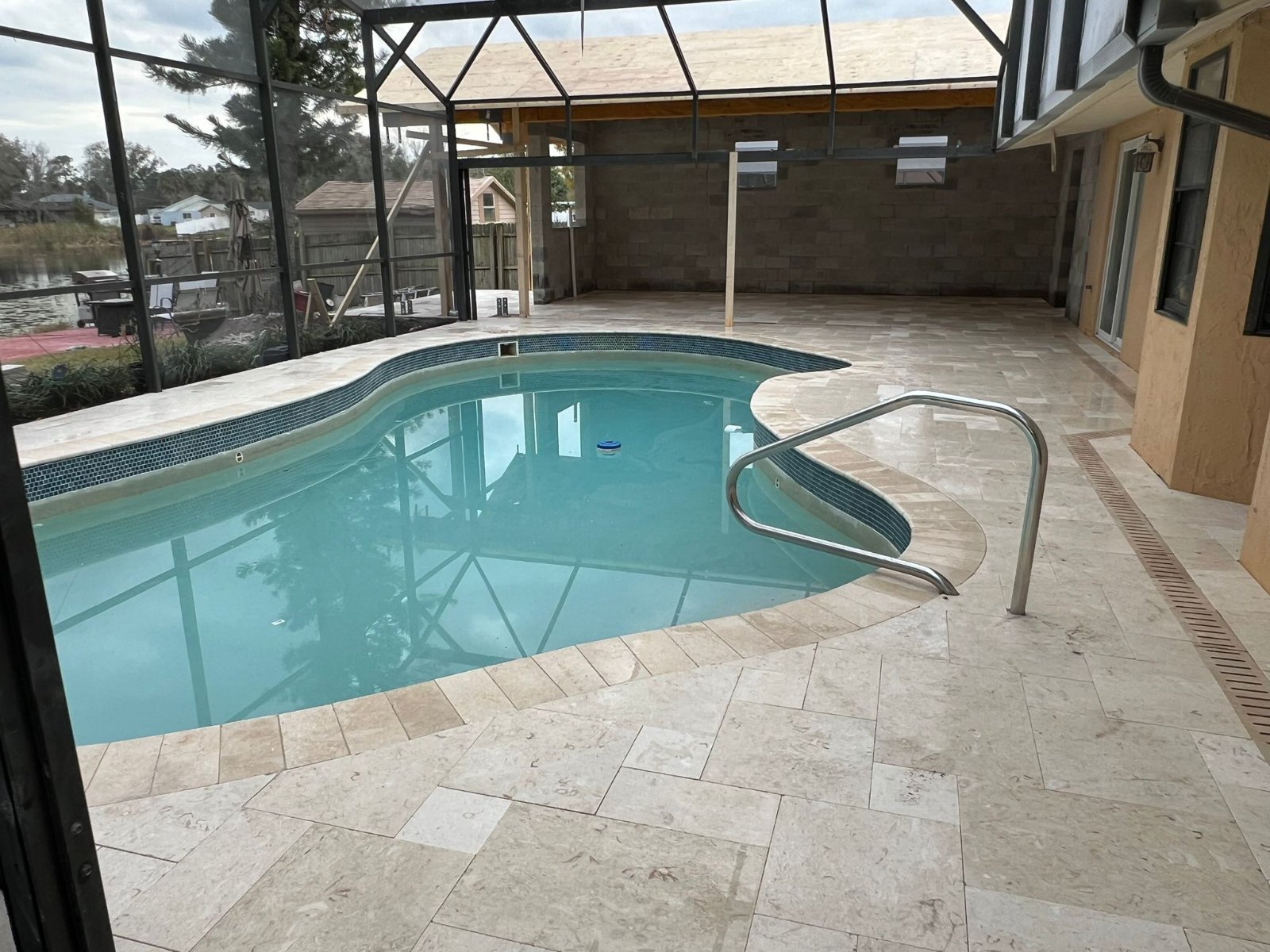
Each application has its own failure modes, and a contractor who builds all of them the same way is telling on themselves.
Driveways take the hardest use on the property. Load, turning tires and the apron transition all concentrate stress. They need the deepest base, the thickest pavers and an interlocking pattern. They also need honest attention to where water goes, since a driveway is usually the largest hard surface on a residential lot and it drains toward something.
Patios are where the design conversation actually happens: how many people you seat, whether the grill and the table can coexist, how the space connects to the back door, and whether you want the surface to end at a lawn edge or step down to a lower level. Getting the size right matters more than most owners expect. Patios built too small are the most common regret we hear about, because furniture eats square footage faster than a drawing suggests.
Pool decks combine slip resistance, drainage away from the water and coping details at the pool edge. They also come with a legal requirement attached, covered in the fence section below, because every residential pool in Florida needs a barrier as one of its required layers of protection.
Paver work also extends past flat surfaces. Retaining walls, elevated paver decks, outdoor kitchen and grill surrounds and step systems are all part of the same trade, built on the same base logic, and they are usually what turns a patio from a place to stand into a place to spend an evening. If you are considering more than one of these, plan them together. Adding a wall or a kitchen later means cutting into a finished surface, and that costs more than building it into the original layout.
What Actually Moves the Price of a Paver Project
We are not going to publish a price per square foot on a page you found in a search, because that number would be wrong for most of the people reading it. What we can do is tell you exactly what makes one quote different from another so you can read your own estimates intelligently.
- Square footage, and how simple the shape is. A rectangle is cheaper per foot than the same area with curves, because curves mean cuts, and cuts mean labor and waste.
- Demolition and haul off. Removing an existing concrete slab, old pavers or a failing surface is real work with disposal costs behind it. New construction lots skip this entirely, which is one reason projects in newer Davenport and Haines City communities often quote differently from the same project in an established Lakeland neighborhood.
- Access. How wide is the side gate. Can a machine reach the back yard, or does every yard of base material travel by wheelbarrow. Access is the single most underestimated cost driver on residential jobs, and it can change a bid substantially without changing the design at all.
- Base depth for the intended use. A driveway spec costs more than a patio spec for the same footprint, and it should.
- Drainage work. Grading, drains or anything that redirects water adds cost. In this climate it is usually the least regrettable money in the whole project.
- Elevation changes. Steps, walls and multi level designs multiply labor compared to a flat pour of the same area.
- Material grade. Paver selection spans a wide range, and it is the one line item you can adjust up or down without compromising the structure of the job.
- Permits and association review. Fees and review time vary. They rarely dominate a budget, but they do affect the calendar.
When you compare two quotes with a large gap between them, the gap is almost never in the pavers. It is in excavation depth, base material, compaction and edge restraint, the four things you cannot see once the job is finished. Ask both contractors to put those specifics in writing.
Rainy Season, Hurricane Season, and When to Schedule
Polk County has two calendars, and outdoor construction runs on the second one.
The rainy season runs from early to mid June into mid or late September, with storms almost every afternoon. Those storms can bring strong wind, hail and occasionally weak tornadoes. Summer sits around 91 degrees for highs and near 69 for lows, with nights staying in the low 70s. Hurricane season is longer than the rainy season, officially June 1 through November 30.
What that means for a project:
- Excavation and base work are the weather sensitive stages. An open excavation that takes on water has to be dried and recompacted before anything goes on top of it. Rain does not ruin a paver job. Rushing past rain does.
- Afternoon storms shift the workday, they do not cancel the season. Crews work through the rainy season here every year. Expect the schedule to breathe a little more in August than in February.
- Booking ahead of the season is the usual strategy. Owners who want a finished yard before summer tend to start the conversation months earlier, because that is when the calendar is most cooperative.
- Storm season is a reason to care about drainage and fence structure. Wind loads on a solid privacy fence and water volume on a hard surface are both design inputs, not afterthoughts.
We will not promise you a completion date on a web page. Weather in this county does not cooperate with promises made in advance, and a contractor who commits to a date before seeing your lot is selling you a number rather than a plan. What we will do is walk the property, tell you what the sequence looks like, and be straight about what a wet week does to it.
Fences in Polk County: What Needs a Permit and What Does Not
Fence rules here are more specific than most homeowners expect, and they are worth knowing before you pick a material.
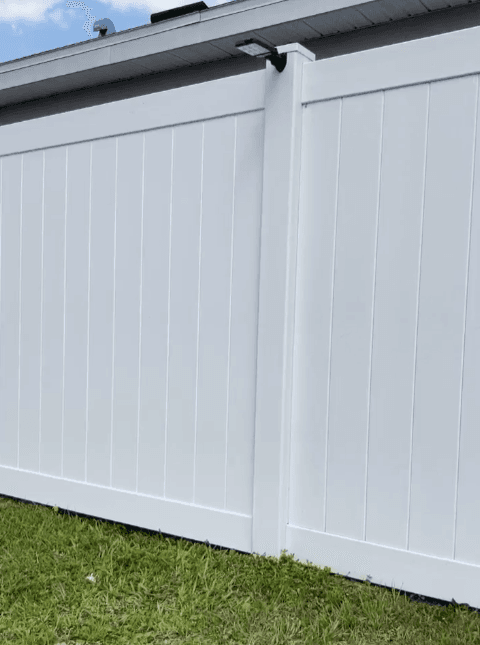
- Chain link and stockade style fences up to 8 feet tall do not require a building permit under the Polk County code.
- Precast masonry, concrete and brick fences require a permit regardless of height. The material triggers the requirement, not the size.
- Opaque fences above 8 feet require Level 1 Review.
- Along the SR 17 Ridge Scenic Highway overlay corridor, maximum fence height drops to 6 feet instead of the 8 feet allowed elsewhere in the county.
- Some materials are prohibited outright on residential fences. Corrugated metal, sheet metal and scrap materials are not allowed, and a fence cannot include broken glass, nails, high voltage electrified wire, or anything else that could injure a person.
Pool barriers are their own category. Every residential pool in Florida, Polk County included, must have a barrier at least 4 feet (48 inches) high measured from the outside ground level, as one of the layers of protection required under state law. That is a safety requirement with statutory weight behind it, not a design preference, and it needs to be part of the plan before the pool deck is laid rather than after.
Verify anything unusual about your lot with the Polk County Building Division at (863) 534-6080, particularly if you are on a corner lot, since visibility requirements at intersections apply and the specifics depend on the property. Our team handles the entire process on fence projects, including submitting plans, paying permit fees and scheduling inspections. Details on styles, gates and materials are on the fence installation page.
Artificial Turf, HOA Rules, and Keeping the Whole Yard Looking New
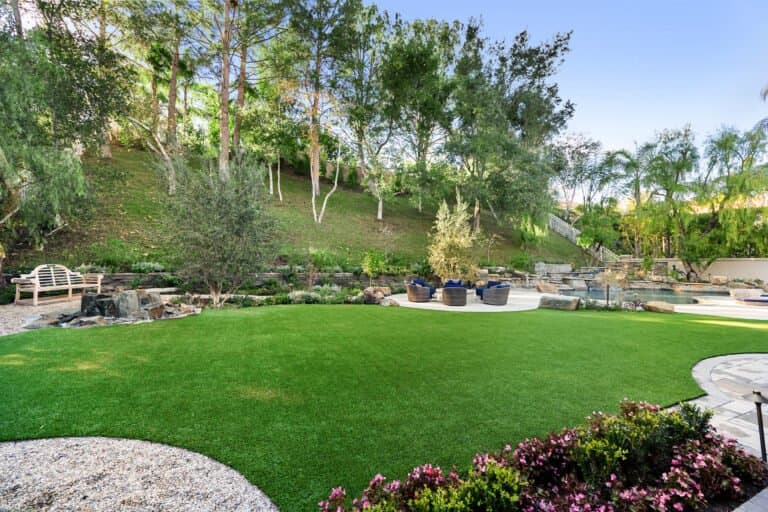
Artificial turf comes up constantly in Polk County, usually for the same three reasons: watering an under used lawn through a hot summer, dogs turning a back yard into dirt, and the fact that a paver patio makes the surrounding grass look worse by comparison.
The rule most homeowners do not know is the useful one. Florida Statute 720.3045 prevents a homeowners association from restricting artificial turf installation in parts of a lot that are not visible from the front of the property, from an adjacent lot, from adjacent common area, or from a community golf course. In plain terms, a back yard behind a privacy fence is usually protected even in a community with a restrictive association. Visible areas, including most front yards, are a different conversation, and in the newer northeast Polk communities you may be dealing with a CDD alongside the HOA. Check both before you assume.
There is also a change in motion at the state level. HB 683 and SB 712 from 2025, codified as Florida Statute 125.572, shift regulation of residential artificial turf installation from local governments to the Florida Department of Environmental Protection, which is charged with setting minimum installation standards covering infill, base, drainage and the absence of heavy metals on lots up to one acre. Once those rules are final, local governments will not be able to prohibit installations that meet the state standard. That transition is still underway, so we are not going to tell you it already governs your project in Polk County. It is worth knowing about, and it is worth asking where things stand when you plan.
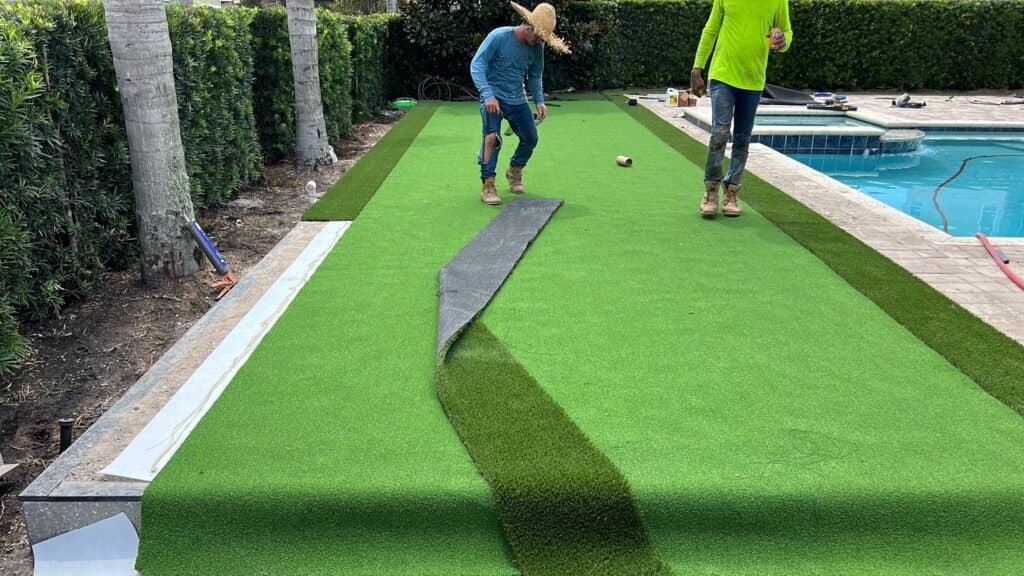
Turf installed well is a base job, same as pavers: excavation, compacted base, drainage, then the surface. Turf installed on unprepared ground holds water, smells in the summer, and develops low spots. See the artificial turf installation page for how the system is built.
Once everything is in, it needs upkeep, and this is the part people skip. Joint sand settles and needs topping up. Surfaces collect organic staining through a wet summer. Fence hardware loosens. Turf needs grooming to stay upright in traffic areas. Our outdoor maintenance plans exist so that the yard you paid for in year one still looks that way in year five, instead of quietly declining until it needs to be redone.
If you are ready to start, the most useful next step is a walk of the actual property. Lot conditions, access, drainage and association requirements decide the project, and none of them can be assessed from a photo. Tell us which part of the county you are in and what you are trying to fix, and we will take it from there.