Where we work in Osceola County
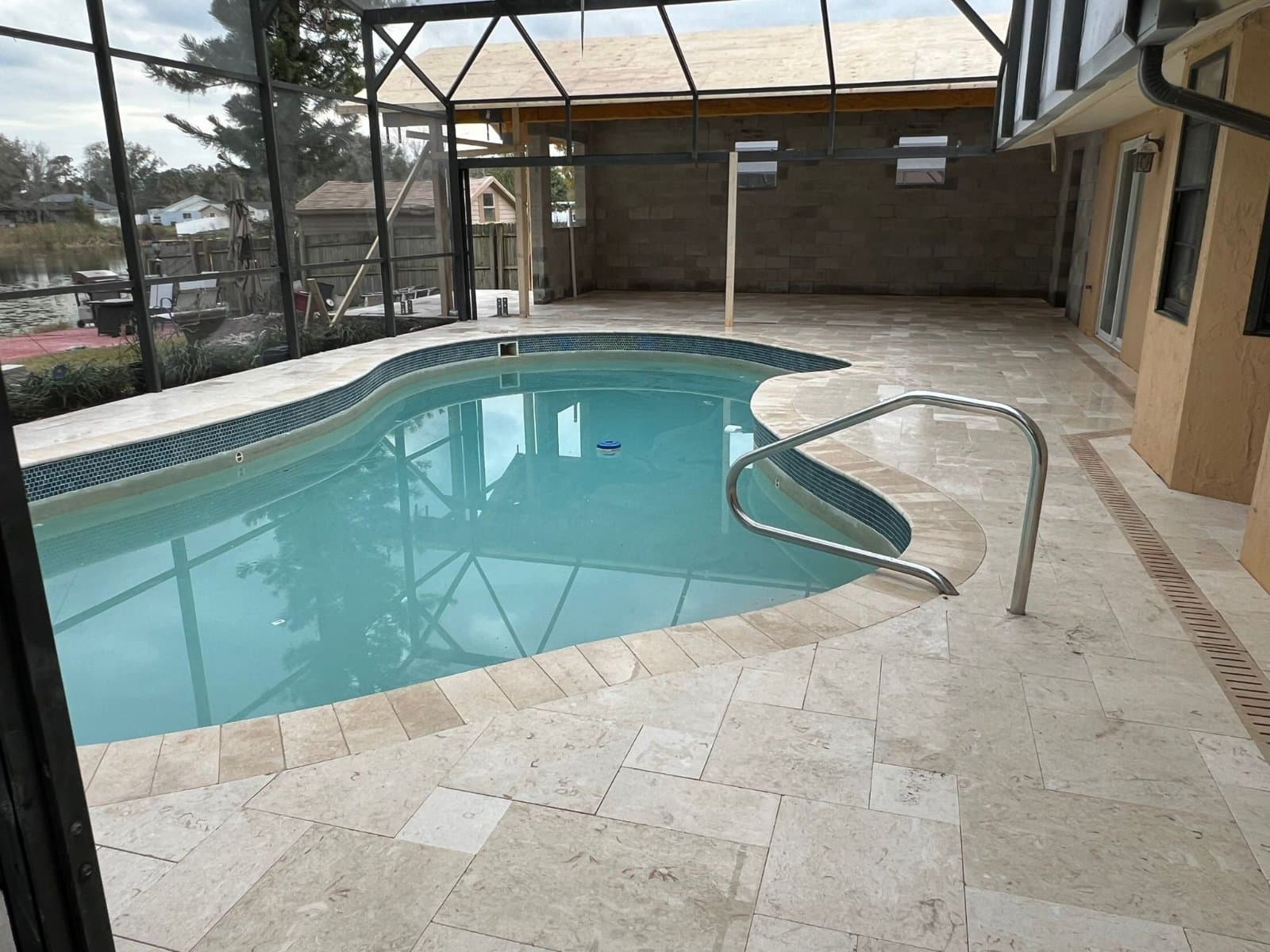
Osceola County runs from the tourist corridor west of Kissimmee, down through St. Cloud, and out into open cattle country. We install brick pavers across all of it: Kissimmee, St. Cloud, Celebration, Poinciana, Buenaventura Lakes, Narcoossee, Harmony, Intercession City, Campbell City, Kenansville, and the properties scattered along the highways toward Yeehaw Junction.
This is one of the fastest growing places in the country. The county population grew 4.7 percent between 2023 and 2024, which put Osceola among the 25 fastest growing counties in the United States for that period, and it has been the fastest growing county in Central Florida since 2009. The U.S. Census Bureau QuickFacts series for the county shows the same climb year after year.
That growth shapes the work we do here. A large share of the yards we walk into have never had anything done to them. The builder poured a small slab off the back slider, rolled out sod, and left. The owner spends one summer looking at it and decides the usable outdoor space needs to be three times bigger. Other jobs are the reverse: a concrete driveway or walkway that has cracked, settled at the control joints, or gone the kind of chalky gray that no amount of pressure washing brings back.
Both are paver jobs. They are not the same paver job. A new build usually means fill dirt that was graded for drainage and never compacted to carry load. A replacement means demolition, hauling, and a subgrade that has been sitting under concrete for years and has to be re-proofed before anything new goes on top. Your quote should say which situation you have and what it changes about the scope.
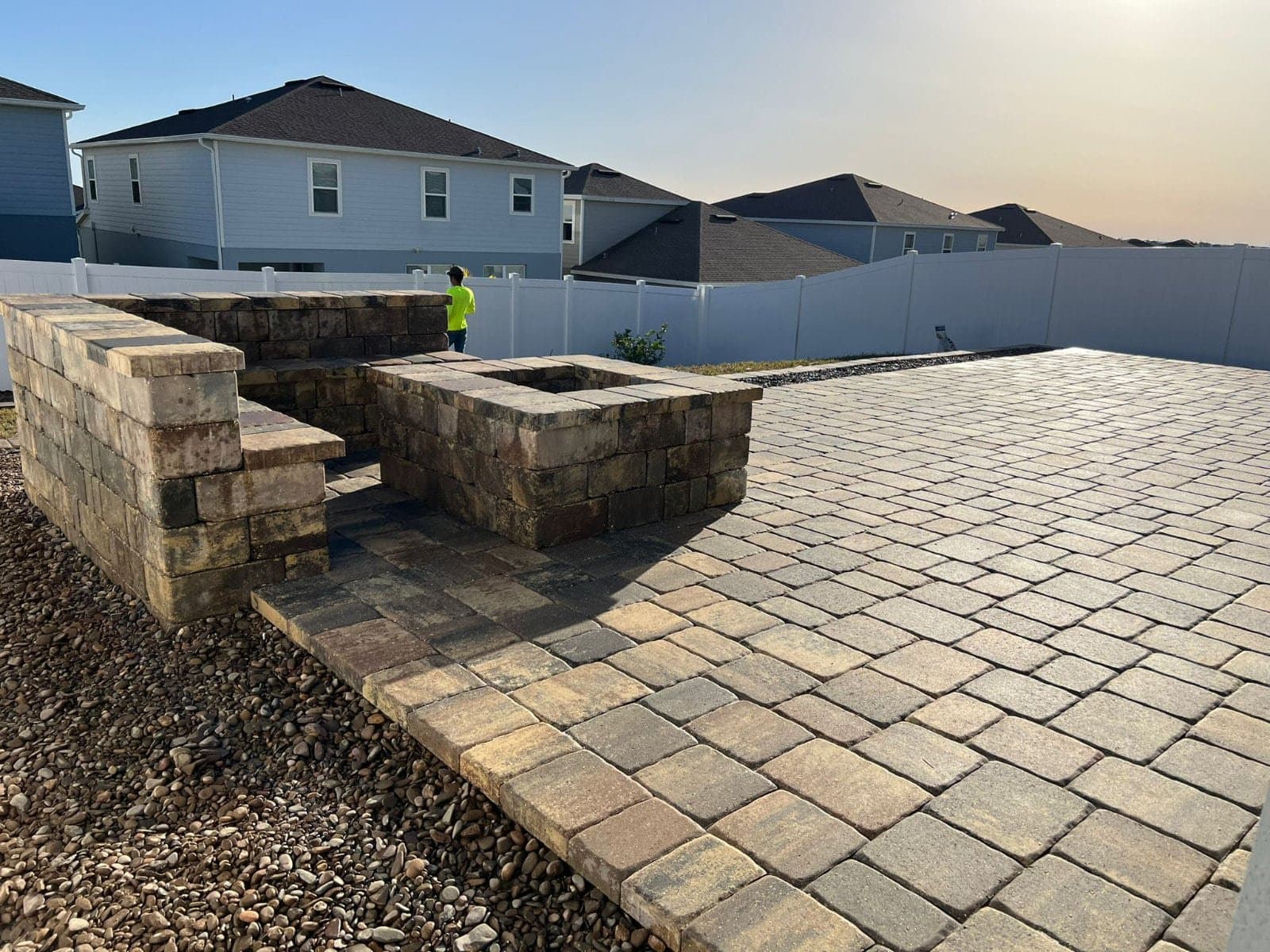
KS Solutions covers four trades in this county: brick paver installation, fence installation, artificial turf installation, and outdoor maintenance plans. Most Osceola projects end up touching at least two of them, because a patio usually needs a gate, and a turf lawn usually needs an edge.
What a brick paver installation actually involves
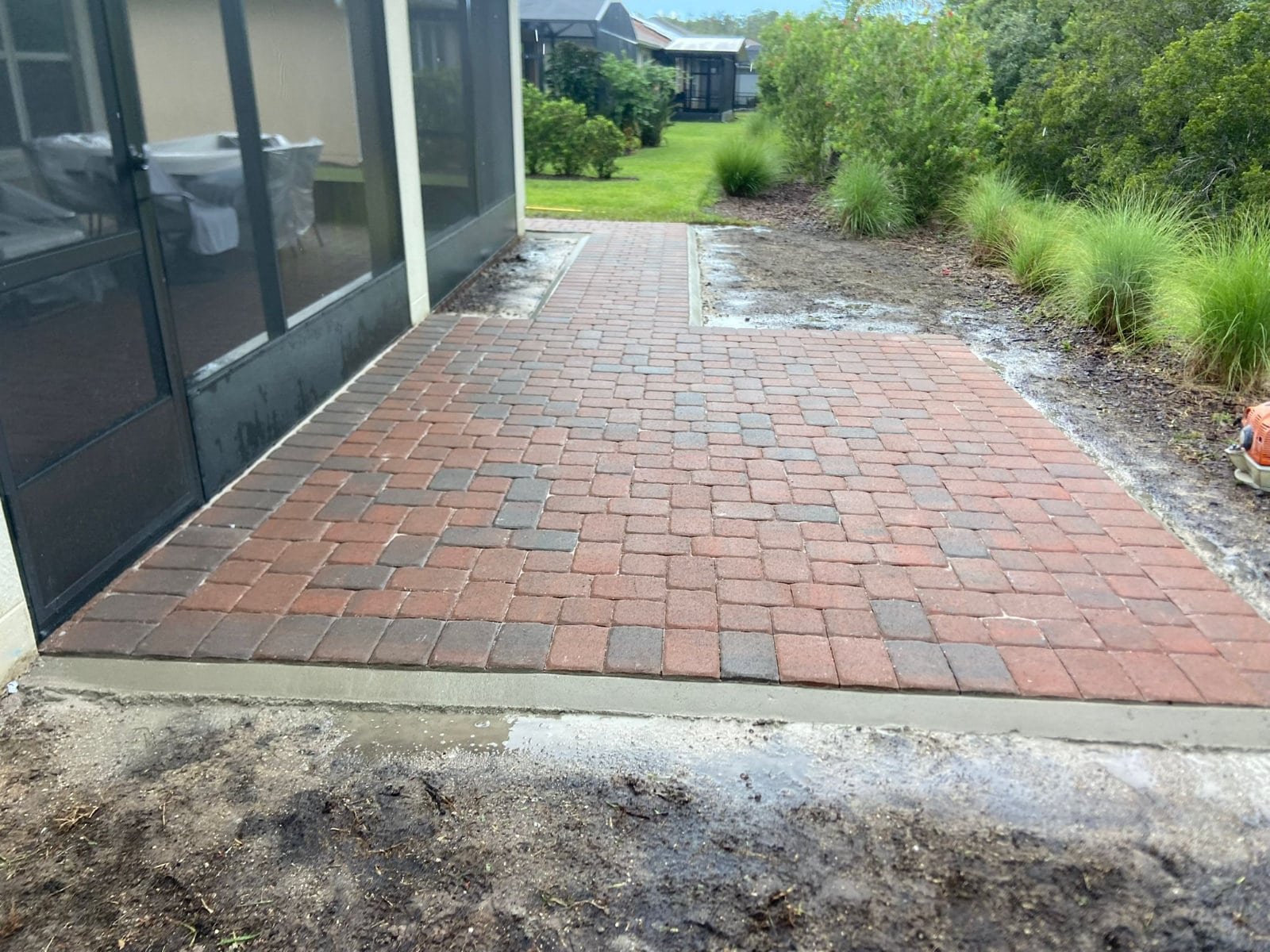
A paver surface is not a decorative layer set on the ground. It is a structural sandwich, and nearly everything that fails later fails in the part you never see once the job is done.
The sequence runs like this:
- Layout and excavation. The dig depth is set by three things stacked together: the finished elevation you want, the thickness of the paver, and the bedding and base layers underneath. Slope is established here, running water away from the house, the pool cage, and the neighbor.
- Subgrade preparation. The native soil is graded and compacted. Soft spots get found now, with a machine, not later with your car.
- Base. Crushed aggregate goes in and gets compacted in lifts. Compacting in layers is the whole point. A thick pile dumped once and rolled over on top is compacted on top and loose underneath, and it will telegraph that through the finished surface within a season or two.
- Bedding layer. A thin, screeded, uniform sand layer. It exists to seat the paver, not to correct humps and dips left in the base. Bedding sand used as a leveling putty is one of the most common shortcuts in this trade.
- Laying and cutting. Pattern gets set, edges and curves get saw cut, and pavers get pulled from several pallets at once so any shade variation blends instead of banding across the middle of your patio.
- Edge restraint. The perimeter gets locked down and spiked into the compacted base. Without it the field has nowhere to go but outward.
- Joint sand and final compaction. Sand is swept into the joints and the surface is vibrated so the sand packs down and the pavers lock against each other. That interlock is what turns thousands of loose units into one flexible surface.
Knowing the sequence lets you read failure. Sunken tire tracks in a driveway mean the base was too thin or was never compacted in lifts. A patio that spreads at the edges with joints opening up means the edge restraint is missing or has come loose. Standing water after an afternoon storm means the slope was never established, or a later addition blocked it. Weeds and ant hills pushing sand out of the joints mean the joint sand is done and needs refreshing.
Load matters too. A driveway carries vehicle weight, so it needs a deeper and better compacted base than a patio that only carries furniture and people. If someone quotes you the same build for a pool deck and a driveway, that is worth a question.
Permits, zoning, and HOA approval in this county
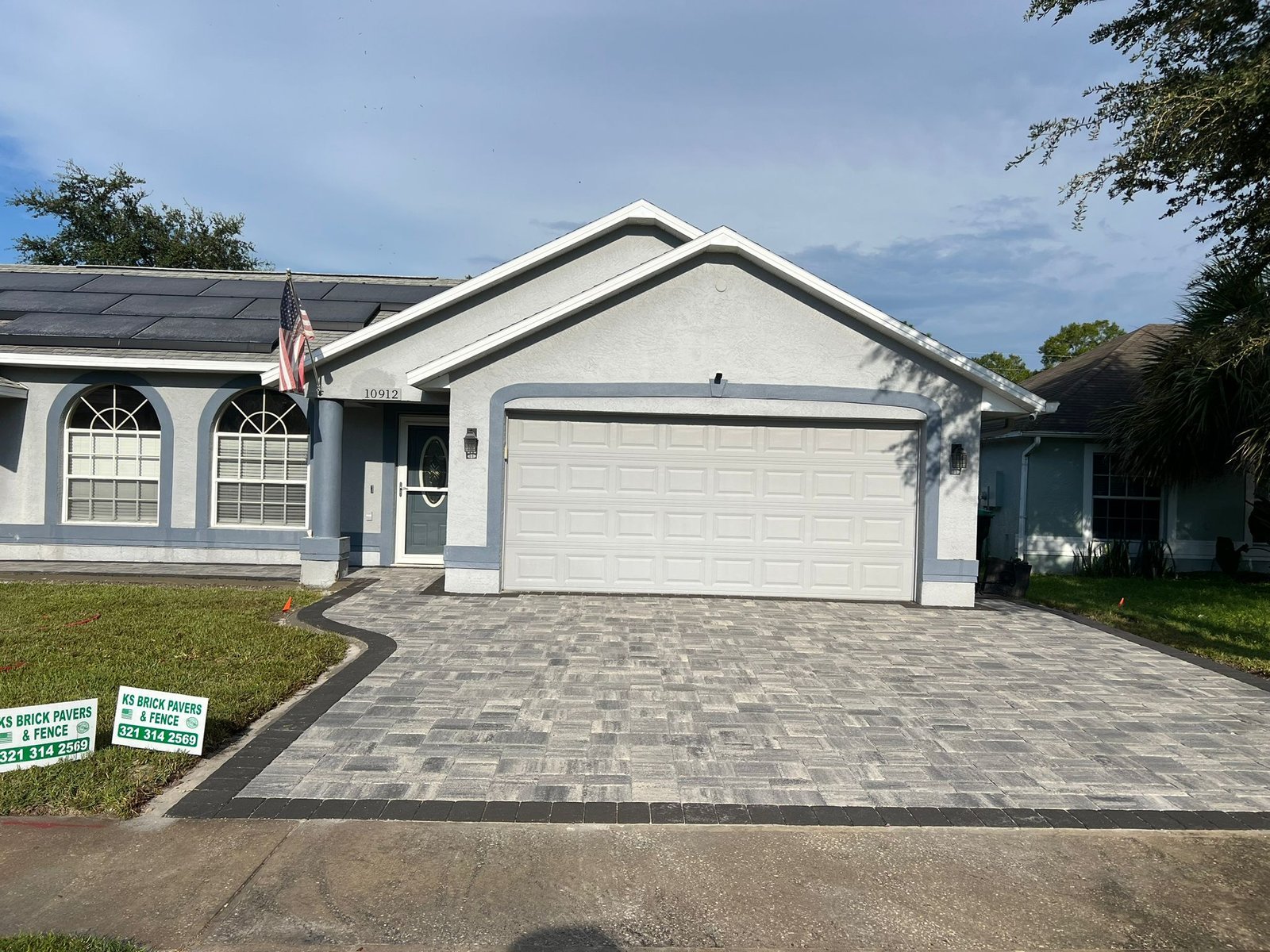
Osceola County has a split that trips people up, and it is worth understanding before you compare quotes.
The Osceola County Building Office, under Community Development, issues permits only for the unincorporated area of the county. If your project sits inside the city limits of Kissimmee or St. Cloud, the permit comes from that city's own building department, not from the county. Two houses a few minutes apart can answer to two different offices. Nobody should be telling you generically that the county pulls your permit without first knowing your address.
For fences, the fee structure is published. Permit guides that reproduce the county fee table list a residential fence permit at 60 dollars, which includes a 30 dollar zoning review, with no separate plan review charge. Zoning review is the part that looks at height, at placement relative to your property lines and easements, and at corner visibility. Fee schedules change, so treat that as the published figure and confirm the current amount with whichever office has jurisdiction over your address.
For pavers specifically, do not assume. Requirements for driveway aprons, impervious coverage, and work in an easement vary by jurisdiction and by what exactly you are building, and we would rather confirm with the office that has authority over your parcel than guess in a quote. That is a five minute call, and it belongs at the start of the job, not at the inspection.
The same goes for your HOA. Many Osceola neighborhoods, especially the newer planned communities, require architectural review before hardscape goes in, and they can have their own rules about material, color, coverage, and setbacks. KS Solutions handles every permit and HOA submittal as part of the quote on paver work. On fence work our team handles the entire process, including submitting plans, paying permit fees, and scheduling inspections. If a contractor tells you the paperwork is your problem, price that in, because your time has a cost and a rejected submittal restarts the clock.
Building around the Central Florida rainy season
Osceola sits in Central Florida's rainy season pattern, and it is sharper than people expect. The wet season runs from late May to the middle of October. From June through September the region averages more than seven inches of rain per month. From October through May the average drops to roughly three inches. The rain also has a schedule: it tends to arrive as afternoon thunderstorms, typically between four and six in the evening.
That changes how hardscape gets built here, not just whether it gets built.
- Compaction depends on moisture. A base that is saturated cannot be compacted properly, and a subgrade holding water has to dry back before it will take load. This is the single biggest reason a crew calls off a day that looks fine in the morning.
- Open excavation is a liability. A trench or an excavated patio left open into an evening storm can fill, wash, and undo a day of grading. Work gets staged so open ground is closed or protected before the afternoon cell arrives.
- Joint sand hates early rain. Sand swept and compacted into joints needs a window before a downpour to stay where it was put.
- Fence posts and gate hardware want stable ground when they are set, which is why post work and paver base work get sequenced rather than run on top of each other.
The practical takeaway is that October through May is the drier build window, and it is also the busier one for exactly that reason. Work happens year round here, because waiting for a perfect week in July is waiting forever, but a summer project is planned around a shorter usable workday and a real chance of weather days. If you want the dry window, the conversation starts before the dry window, not during it.
(321) 353-7445Get Immediate Service
Hurricane season, and why wind matters more than surge here
The Atlantic hurricane season runs from June 1 to November 30, with peak activity from the middle of August through the middle of October and a statistical peak around September 10, according to NOAA tropical cyclone climatology. That is the calendar every outdoor trade in this state plans against.
Osceola's exposure is specific. The county is inland with no direct coastline, which lowers storm surge risk compared to coastal counties. What it does not lower is wind. Risk modeling from First Street rates the county as extreme for hurricane, tornado, and severe storm wind. So the design question in Osceola is not how to survive water coming up the yard. It is how the structure behaves when the wind comes across it.
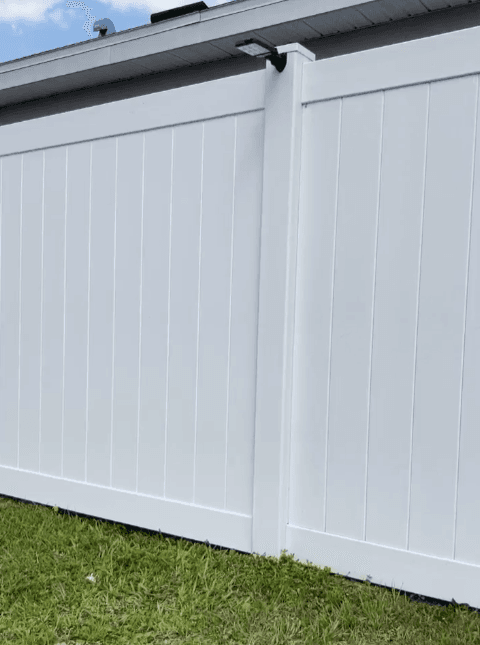
For fences, that pushes the conversation toward post depth and setting, post spacing, panel type, and gate hardware, because gates are almost always the first thing to fail and the most annoying thing to live without. A privacy fence is a solid wall to the wind. How it is built decides whether it leans, loses pickets, or holds.
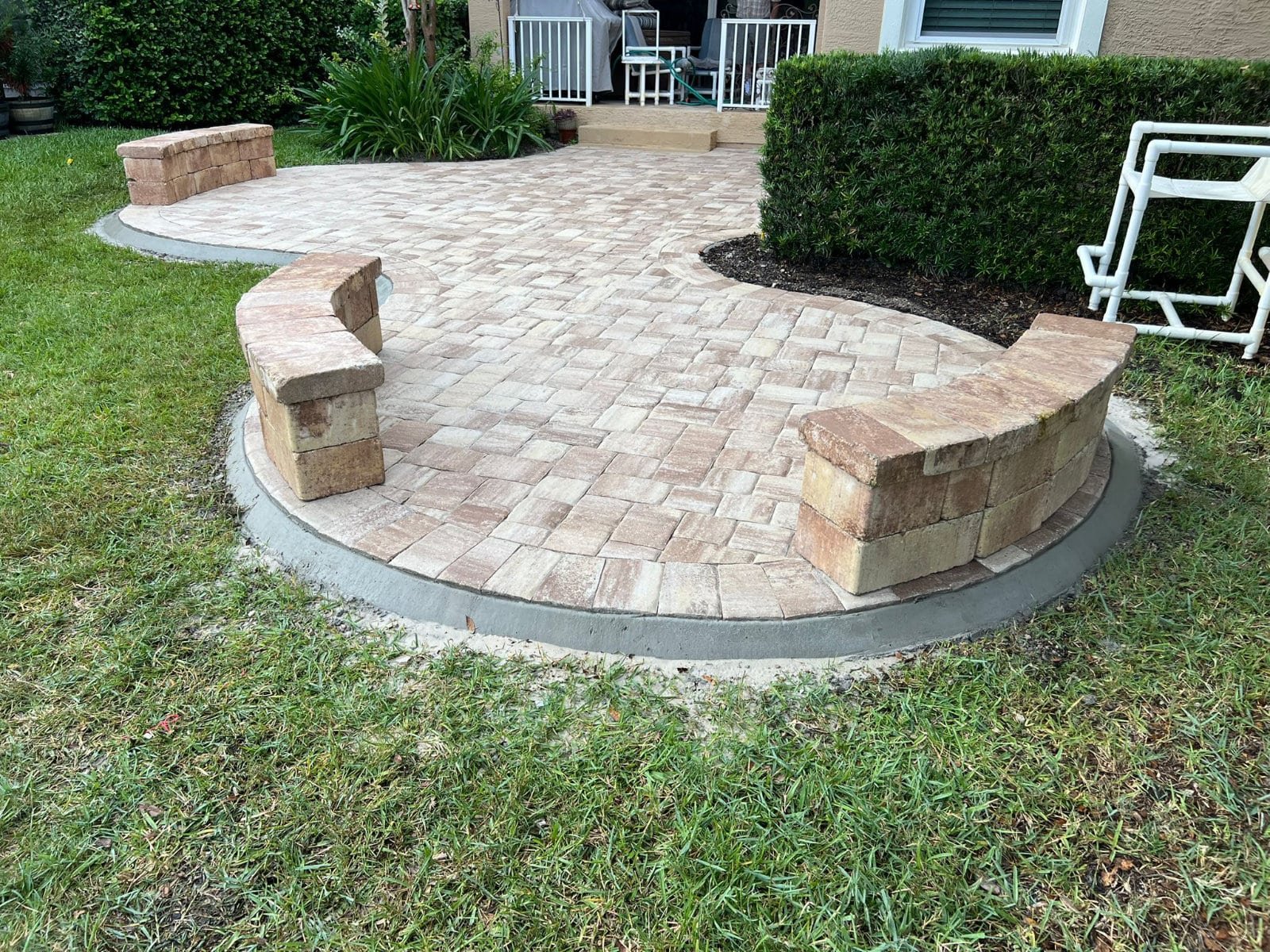
For pavers, wind exposure is one of the quiet arguments for segmental paving over poured concrete. A paver field is thousands of individual units on a flexible base. If a section moves, settles, or has to come up for a utility repair or a washout, it can be lifted, reset, and put back with the same material. A cracked slab is a demolition job. That difference does not show up on installation day. It shows up the first time something goes wrong.
What actually changes the price of a paver project
We do not publish prices, because a real number depends on your yard. But the variables are not a mystery, and knowing them lets you compare two quotes that look different and understand why.
- Square footage, and shape. A simple rectangle and a curved patio with the same area are not the same labor. Curves mean cuts, and cuts mean saw time and waste.
- What is already there. Bare dirt is one job. Removing an existing concrete slab or driveway adds demolition, breaking, loading, and hauling before any new work starts.
- Load. A driveway that carries vehicles needs a deeper and more thoroughly compacted base than a walkway. Same visible surface, different build underneath.
- Access. If a machine can reach the work area, material moves fast. If everything has to come through a narrow side gate by wheelbarrow, the labor line goes up. Corner lots and open side yards are cheaper to work than tight zero lot line properties.
- Elevation and structure. Steps, raised decks, seat walls, and retaining walls are structural elements with their own base and drainage requirements. They are not a decorative add on to the patio price.
- Drainage work. If the existing grade sends water toward the house or a neighbor, correcting it can mean added fill, drains, or a reworked slope. This is not optional, and it is the thing most likely to be missing from a cheap quote.
- Material. Paver style, thickness, and finish vary in cost, and so does the amount of waste a given pattern creates.
- Paperwork. Permit fees are real money and HOA submittals are real hours. On our quotes they are included in the scope rather than surfacing later as a surprise.
When you compare bids, compare these lines, not the bottom number. The most common way a paver quote gets cheap is by thinning the base, skipping drainage correction, or leaving demolition and permits out of scope. All three are invisible on the day the crew leaves.
Pool decks and the Florida pool barrier rule
Pool decks are one of the most common paver projects in this county, and they come with a rule that is not a style preference.
Florida Statute 515.29 requires a barrier at least four feet high around a residential pool. The barrier cannot have gaps that would let a young child pass underneath, squeeze through, or climb over, and the gate has to be self closing and self latching with the latch on the pool side. That is state law, and it applies regardless of what your HOA thinks about fence styles.
The reason this belongs on a paver page is sequencing. The barrier and the deck share the same ground. Post locations, deck edges, drainage, and the gate swing all interact, and doing them in the wrong order means cutting into new pavers to set a post or ending up with a gate that will not clear the finished surface. When the deck and the barrier are planned together, the posts, the edge restraint, and the slope all get laid out once.
It also matters for older properties. If you are replacing a deck around an existing pool, that is the natural moment to look hard at the barrier you already have: gaps at the bottom, a gate that no longer latches on its own, a latch that has migrated to the wrong side. Our fence installation work and our paver work are handled by the same company for exactly this reason.
Fences, turf, and keeping the work looking new
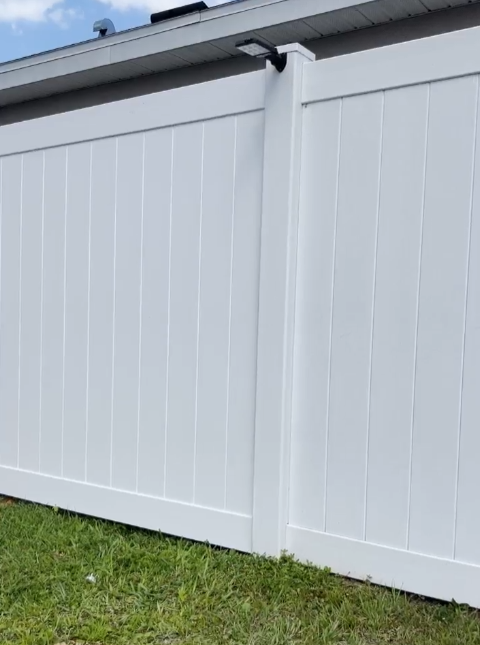
Very few Osceola projects are only pavers. The other three services usually come up in the same conversation.
Fences
Fencing carries the permit and zoning review discussed above, plus the wind considerations that come with an inland county rated extreme for storm wind. Our team handles the whole permitting process on fence work, including submitting plans, paying the permit fees, and scheduling the inspections. Full detail is on the fence installation page.
Artificial turf
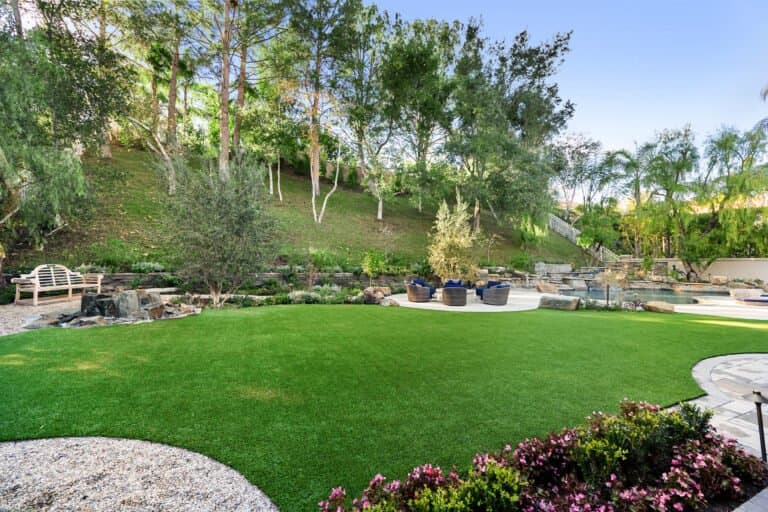
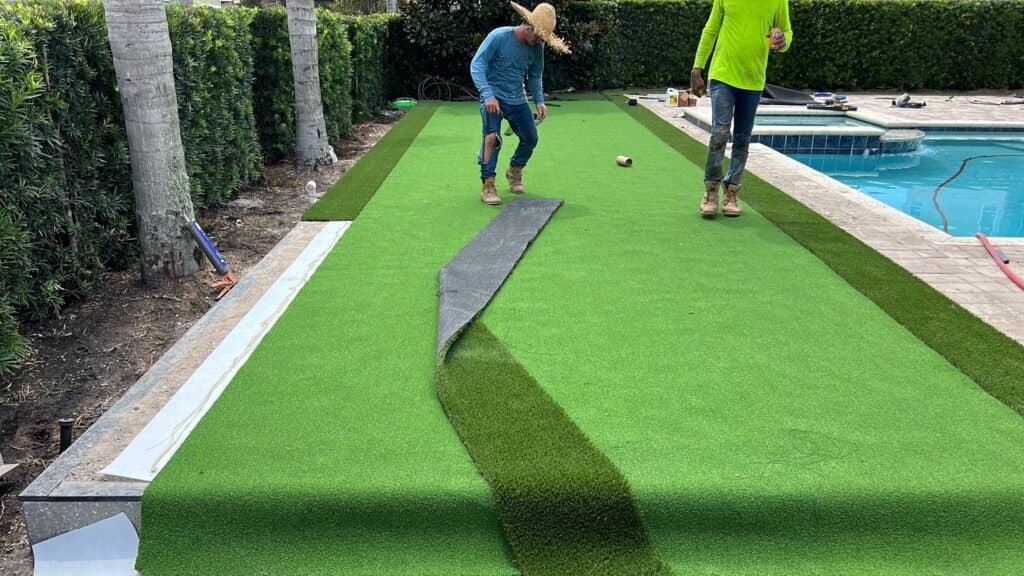
Turf and pavers share a build logic: both are only as good as the compacted base and the drainage under them. One caution specific to Florida. State law, through Statute 720.3075 and the Florida Friendly Landscaping definition in Statute 373.185, stops a homeowners association from banning Florida Friendly landscaping outright. Artificial turf is not explicitly listed as protected under that framework, so an HOA can still restrict it in some cases, and local rules or deed restrictions can apply on top. Anyone who tells you state law guarantees your right to install turf regardless of your HOA is overselling it. Check your documents, and submit for approval. See artificial turf installation for how the base and infill are built.
Maintenance
Paver surfaces are low maintenance, not no maintenance. Joint sand depletes, especially in the joints that take the most water off a roofline during the wet season. Organic growth shows up fast in a humid climate. Fence hardware loosens. Turf infill needs attention in high traffic lanes. Our outdoor maintenance plans exist so that upkeep is scheduled instead of remembered.
How to choose a paver contractor in Osceola County
Most of the difference between contractors here is not visible in a portfolio photo, because every finished patio looks good the week it is finished. These questions surface the difference before you sign.
- Which office issues my permit, and who pulls it? A contractor who works this county regularly will answer without hesitating, because the answer depends on whether you are in Kissimmee, in St. Cloud, or in the unincorporated county, and they will know which one you are.
- What is the base spec, in writing? Material, depth, and whether it is compacted in lifts. If the quote just says base preparation, ask for the detail.
- What edge restraint is being used, and how is it anchored? This is the single cheapest thing to skip and one of the most common causes of spreading edges.
- Where does the water go? Ask them to walk you through the slope and show you where the runoff exits, especially if the yard currently holds water after a summer storm.
- Who handles the HOA submittal? And what happens to the schedule if the association asks for a revision.
- Is demolition and haul away included? If you have an existing slab, this is a real line item that some quotes quietly omit.
- Is the scope written down? Square footage, material, pattern, base build, edge treatment, drainage, permits, and cleanup. A one line quote is not a scope.
We also work the counties around Osceola, so if your property or your rental sits over a line, the same crews cover Polk County, Orange County, Lake County, Seminole County, and Volusia County. Rules change at the county and city line, which is one more reason the address, not the region, is where every quote should start.